Why Glasses Don’t Fix Lazy Eye (And What Actually Helps)
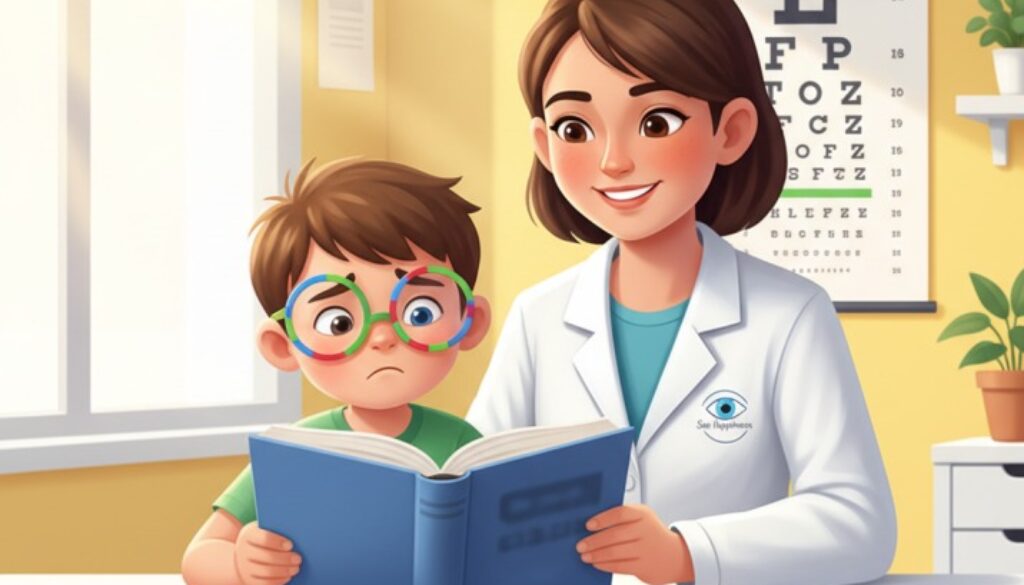
If your child has been diagnosed with amblyopia (lazy eye) and prescribed glasses, you might wonder: “Can glasses fix lazy eye completely?” Many parents discover that glasses and lazy eye treatment aren’t as straightforward as they hoped. While glasses can be an important first step, they often fall short of providing the comprehensive solution families need.
This evidence-based guide explains exactly why glasses have limitations in treating lazy eye, what recent scientific research reveals about more effective approaches, and how personalized treatment plans can achieve the life-changing results that glasses alone cannot deliver.
What Is Lazy Eye (Amblyopia) and Why Is It More Complex Than Vision Problems
Lazy eye, medically known as amblyopia, affects 1.36% to 4% of children globally (with regional variation) and is the leading cause of monocular vision loss in adults under 20. Unlike simple refractive errors that glasses easily correct, amblyopia is fundamentally a brain-based developmental disorder.
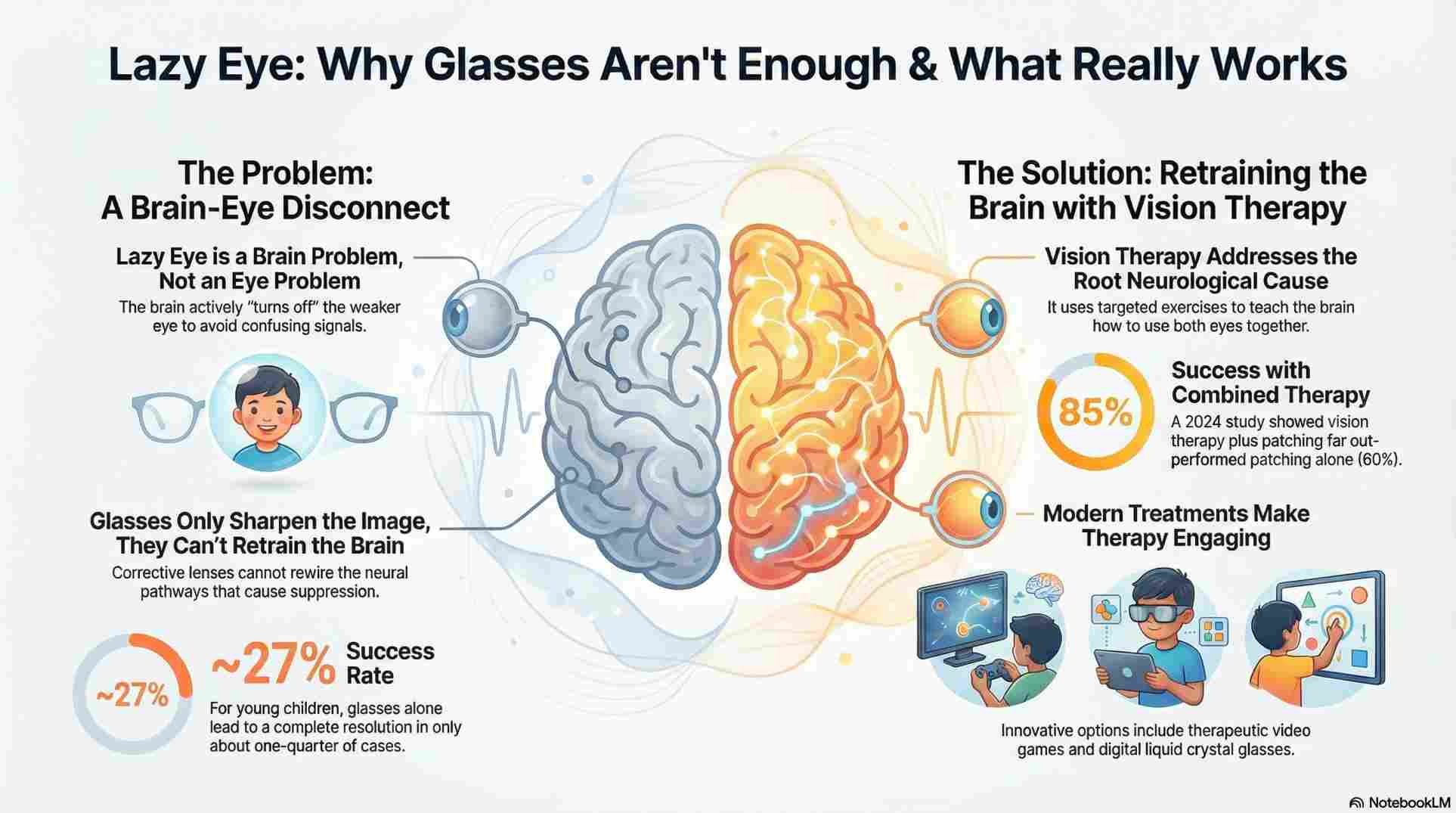
During the critical period of visual development (birth to age 8-10), the brain learns to process and combine images from both eyes. When one eye consistently sends a blurred, misaligned, or blocked image, the brain begins to suppress or “turn off” the input from the weaker eye to avoid confusion.
The Three Types of Amblyopia
Refractive Amblyopia occurs when significant differences in prescription between the two eyes cause the brain to favor the eye with clearer vision. For example, one eye might be severely nearsighted while the other has normal vision.
Strabismic Amblyopia develops when eye misalignment (crossed or wandering eyes) causes double vision, prompting the brain to suppress the misaligned eye.
Deprivation Amblyopia results from physical blockages like congenital cataracts or droopy eyelids that prevent clear images from reaching the brain during crucial developmental periods.
The Scientific Truth: Why Glasses Alone Can’t Fix the Brain-Based Problem
Understanding the Neurological Foundation
Recent neuroimaging studies reveal that amblyopia involves abnormal neural connections between the eye and the brain’s visual processing centers. Dr. Susan Barry’s groundbreaking research, documented in “Fixing My Gaze,” demonstrates that the primary issue isn’t in the eye itself, but in how the brain processes visual information.
Glasses can only correct refractive errors—they cannot rewire the neural pathways that have learned to suppress one eye’s input. This is why children may achieve perfect 20/20 vision with glasses in each eye individually, yet still struggle with reading, depth perception, and eye coordination.
Recent Research Findings (2024)
A landmark 2024 randomized controlled trial published in Ophthalmic and Physiological Optics compared three treatment approaches for 52 amblyopic children:
- Glasses with a 2-hour daily patching only
- Glasses with monocular perceptual learning
- Glasses with patching plus vision therapy
Results were striking: The vision therapy combined group achieved 85% success in reaching normal or near-normal vision levels, compared to only 60% in the glasses-and-patching-only group. Additionally, children receiving vision therapy showed superior improvements in stereoacuity (3D vision) and binocular function.
When Glasses Are Helpful vs. When They Fall Short
Glasses Work Best For:
Refractive Amblyopia in Young Children: Research shows that for children ages 3-7 with uncorrected anisometropic amblyopia, glasses alone can provide complete resolution in approximately 27% of cases and improvement of two or more lines in 77% of cases.
First-Line Treatment: Glasses serve as the essential foundation by ensuring both eyes receive clear retinal images, creating optimal conditions for brain retraining.
Preventing Further Deterioration: Proper optical correction prevents the vision difference between eyes from worsening during treatment.
Glasses Fall Short For:
Strabismic Amblyopia: When eye misalignment is the primary cause, glasses cannot address the underlying muscle coordination problems.
Severe Refractive Amblyopia: Large prescription differences often require active brain retraining beyond optical correction.
Binocular Function Deficits: Glasses cannot restore 3D vision, depth perception, and eye teamwork skills that amblyopia typically disrupts.
Adults with Longstanding Amblyopia: The visual system becomes less responsive to optical correction alone as neural plasticity decreases with age.
What Actually Works: Evidence-Based Treatment Alternatives
Vision Therapy: The Gold Standard for Comprehensive Treatment
Vision therapy addresses the root neurological cause of amblyopia by systematically retraining the brain to use both eyes together effectively. Unlike passive treatments, vision therapy actively stimulates neural plasticity through carefully designed exercises.
Key Components of Effective Vision Therapy:
Monocular Activities improve the amblyopic eye’s visual processing abilities through specialized exercises targeting accommodation, tracking, and central fixation.
Binocular Integration Exercises gradually teach the brain to combine images from both eyes, restoring critical functions like depth perception and stereo vision.
Perceptual Learning Protocols use computer-based activities to enhance contrast sensitivity and visual acuity more effectively than traditional approaches.
Recent Breakthrough: 2024 Research Validates Combined Approach
A comprehensive 2024 study in BMC Ophthalmology followed 36 children ages 7-10 with unilateral amblyopia—an age group traditionally considered “too old” for effective treatment. The results challenged conventional wisdom:
Vision therapy group: Visual acuity improved from 0.39 ± 0.24 logMAR to 0.10 ± 0.23 logMAR. Control group (glasses + patching only): Significantly less improvement
Critical finding: Vision therapy remained effective even in older children when combined with appropriate optical correction and targeted exercises.
Digital Innovation: Modern Alternatives to Traditional Patching
Intermittent Occlusion Therapy using liquid crystal glasses (like Amblyz) provides effective treatment without the social stigma of traditional patches. Studies show that 4 hours of intermittent occlusion equals the effectiveness of 2 hours of conventional patching.
Dichoptic Video Games delivered through specialized headsets allow children to play engaging games while receiving therapeutic visual input to both eyes. The FDA-cleared CureSight system has demonstrated superior outcomes compared to patching in pivotal trials.
Binocular iPad Applications provide convenient home-based treatment through carefully designed apps that present different images to each eye, encouraging binocular cooperation.
The Cook Vision Therapy Center Approach: Personalized Treatment for Optimal Outcomes
Beyond One-Size-Fits-All Solutions
At Cook Vision Therapy Center, Dr. David L. Cook’s four decades of international experience have demonstrated that successful amblyopia treatment requires individualized protocols addressing each patient’s specific visual deficits.
Comprehensive Evaluation Process:
Advanced Diagnostic Testing identifies not just the presence of amblyopia, but the specific neural pathways requiring rehabilitation.
Binocular Function Assessment measures depth perception, eye coordination, and suppression patterns to design targeted therapy.
Personalized Treatment Planning combines optimal optical correction with evidence-based vision therapy protocols tailored to each patient’s age, severity, and lifestyle needs.
Treatment Outcomes and Success Rates
Children under 10: 77-85% achieve significant improvement with combined optical correction and vision therapy (based on 2024-2025 clinical trials). Children 10-17: 55-70% success rate with intensive, personalized protocols.
Adults: 54% achieve 20/20 vision (from a 12-30 age group study), with 95% achieving 20/40 or better vision. Adult treatment shows an average improvement of 1.7 lines of visual acuity over 24 weeks.
Non-Surgical Philosophy
Cook Vision Therapy Center specializes in non-surgical, patching-free approaches that achieve lasting results without the trauma and limitations of traditional methods. This philosophy particularly appeals to families seeking alternatives to aggressive surgical recommendations.
Treatment Timeline: What to Expect and When
Phase 1: Optical Foundation (Months 1-3)
A precise glasses prescription ensures optimal retinal image quality.
Initial suppression testing establishes baseline binocular function.
Home support strategies maintain consistency between office visits.
Phase 2: Active Rehabilitation (Months 3-9)
Weekly in-office vision therapy sessions target specific deficits.
Daily home reinforcement exercises accelerate neural adaptation.
Progress monitoring adjusts protocols based on measured improvements.
Phase 3: Integration and Maintenance (Months 9-12)
Binocular skill development restores 3D vision and depth perception.
Real-world application training ensures skills transfer to daily activities.
Long-term stability protocols prevent regression
Special Considerations for Adult Amblyopia Treatment
Debunking the “Critical Period” Myth
Recent neuroplasticity research has revolutionized our understanding of adult visual system adaptability.
Adults retain significant capacity for visual improvement well beyond traditional “critical periods.”
Dr. Sue Barry’s personal journey, documented extensively in scientific literature, proved that adults can develop stereoscopic vision for the first time through appropriate vision therapy—even after age 40.
Adult-Specific Treatment Modifications
Extended Treatment Duration: Adults typically require 12-18 months vs. 6-12 months for children.
Intensive Protocols: More frequent sessions and longer daily home practice optimize limited plasticity.
Motivation-Based Approaches: Adult-friendly exercises maintain engagement throughout extended treatment periods
Real-World Benefits for Adults
Adults completing comprehensive amblyopia treatment report:
- Improved driving safety, especially night driving and parking
- Enhanced sports performance through better depth perception
- Reduced eye strain during computer work and reading
- Increased confidence in social and professional situations
Cost-Effectiveness: Vision Therapy vs. Glasses-Only Approach
Economic Analysis of Treatment Options
Glasses-only approach: $200-600 initial cost (average $350 without insurance, $200 with insurance), but often requires years of follow-up with limited improvement
Comprehensive vision therapy: $2,800-6,000 total investment, typically achieving definitive results within 12-18 months
Digital therapy alternatives: $1,500-2,000 for FDA-cleared systems like CureSight or Luminopia over 12-16 weeks
Long-term value proposition: Vision therapy’s upfront cost ($2,800-6,000) is offset by:
- Reduced need for ongoing interventions
- Prevention of adult vision loss complications
- Improved academic and career opportunities
- Enhanced quality of life throughout adulthood
Insurance Coverage Considerations
Many vision insurance plans now recognize vision therapy as a medically necessary treatment for amblyopia, especially when glasses alone have proven insufficient. Cook Vision Therapy Center works with families to maximize insurance benefits and offers flexible payment options.
When to Seek Specialized Care: Red Flags and Warning Signs
Immediate Consultation Recommended If:
Glasses provide no improvement after 12-16 weeks of consistent wear Child continues struggling with reading, writing, or coordination despite clear vision in each eye. Persistent headaches, eye strain, or avoidance of visual tasks occur.
Social or academic performance declines due to vision-related challenges
Questions to Ask Your Eye Care Provider:
- “What specific type of amblyopia does my child have, and how does that affect treatment options?”
- “What are the expected outcomes with glasses alone vs. comprehensive vision therapy?”
- “How will we measure progress beyond just reading the eye chart?”
- “What is the long-term prognosis for binocular function and depth perception?”
The Path Forward: Making Informed Treatment Decisions
Key Takeaways for Parents and Adults:
Glasses are essential but often insufficient for complete amblyopia treatment, especially when binocular function is impaired.
Early intervention provides optimal outcomes, but treatment remains effective well into adulthood with appropriate protocols.
Personalized, evidence-based approaches significantly outperform one-size-fits-all methods in achieving lasting results.
Vision therapy combined with optical correction represents the current gold standard for comprehensive amblyopia treatment.
Additional Resources & Key Citations
For readers seeking more detailed information about the research and data referenced in this article, here are three essential external resources:
1. National Eye Institute – Amblyopia (Lazy Eye) – Official Clinical Guidelines
The National Eye Institute provides authoritative, up-to-date clinical information about amblyopia prevalence, symptoms, and treatment guidelines. This government resource was used for prevalence statistics (up to 3-4% of children) and standard treatment protocols referenced throughout our article.
2. StatPearls Medical Education – Amblyopia Clinical Review (2025)
This peer-reviewed medical education resource provides comprehensive clinical data on amblyopia prevalence (1-2% globally), treatment success rates, and evidence-based protocols. Updated February 2025, it served as a primary source for our treatment effectiveness statistics and clinical recommendations.
3. American Academy of Ophthalmology – Amblyopia Treatment Modalities
The AAO’s clinical review provided the foundational data for our glasses effectiveness statistics (27% complete resolution, 77% improvement of 2+ lines) and comparative treatment protocols. This resource offers evidence-based treatment algorithms used by eye care professionals worldwide.
Take Action: Your Next Steps for Effective Lazy Eye Treatment
If You’re Frustrated with Limited Progress from Glasses Alone:
📞 Schedule a Comprehensive Vision Therapy Evaluation
Don’t let months turn into years of limited progress. A detailed assessment will:
- Identify specific visual deficits requiring treatment
- Develop a personalized therapy protocol based on your child’s needs
- Establish realistic timelines and expectations for improvement
- Provide alternatives to traditional patching methods that actually work
🆓 Start with a Free Phone Consultation
Speak directly with Dr. Cook’s team to discuss your specific situation and determine if advanced vision therapy could provide the breakthrough results that glasses alone cannot deliver.
Ready to Transform Your Child’s Vision?
Don’t wait for your child to “outgrow” their vision problems. Early intervention with proper treatment can change everything.
FAQs
-
Glasses only sharpen the image entering the eye; they don’t fix how the brain processes it. Lazy eye is a brain-eye connection issue, not just a vision clarity problem.