Improving Hand-Eye Coordination Through Vision Therapy
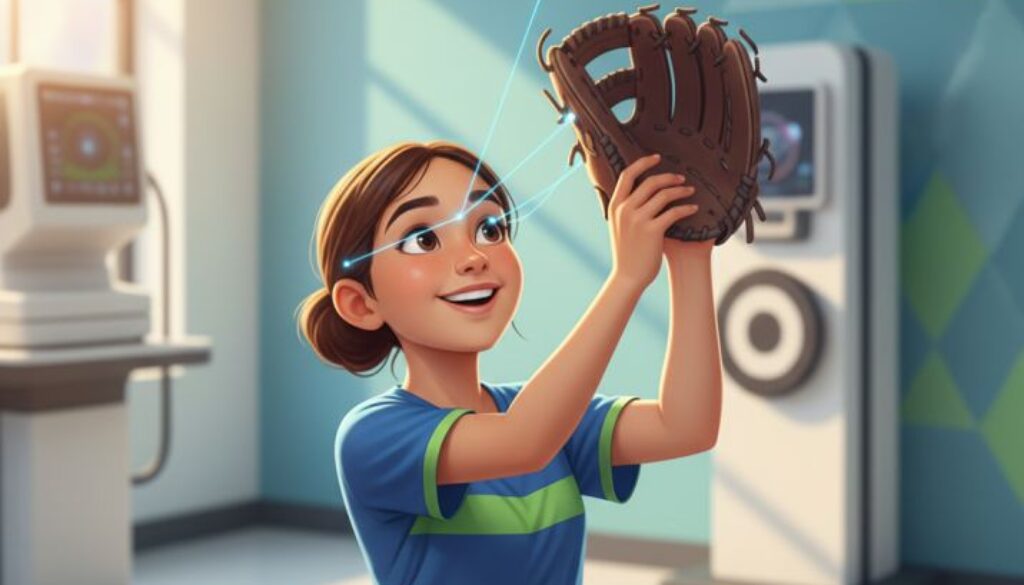
Vision therapy improves hand-eye coordination by using specialized exercises to rewire the neurological connection between your eyes and brain. Whether you are managing a child’s developmental struggles, enhancing athletic performance, or addressing adult coordination decline, targeted visual training offers a scientifically proven path to permanent improvement. At Cook Vision Therapy Center in Atlanta, we specialize in non-surgical programs that transform how you process and react to the world around you.
Struggling with coordination? Schedule a Comprehensive Visual Assessment at our Atlanta clinic.
What Is Hand-Eye Coordination and Why Does It Matter?
Hand-eye coordination, technically known as visual-motor integration, represents the brain’s ability to synchronize visual information with precise physical movements. This complex neurological process requires seamless communication between your visual system, brain processing centers, and motor control networks.
The Science Behind Visual-Motor Coordination
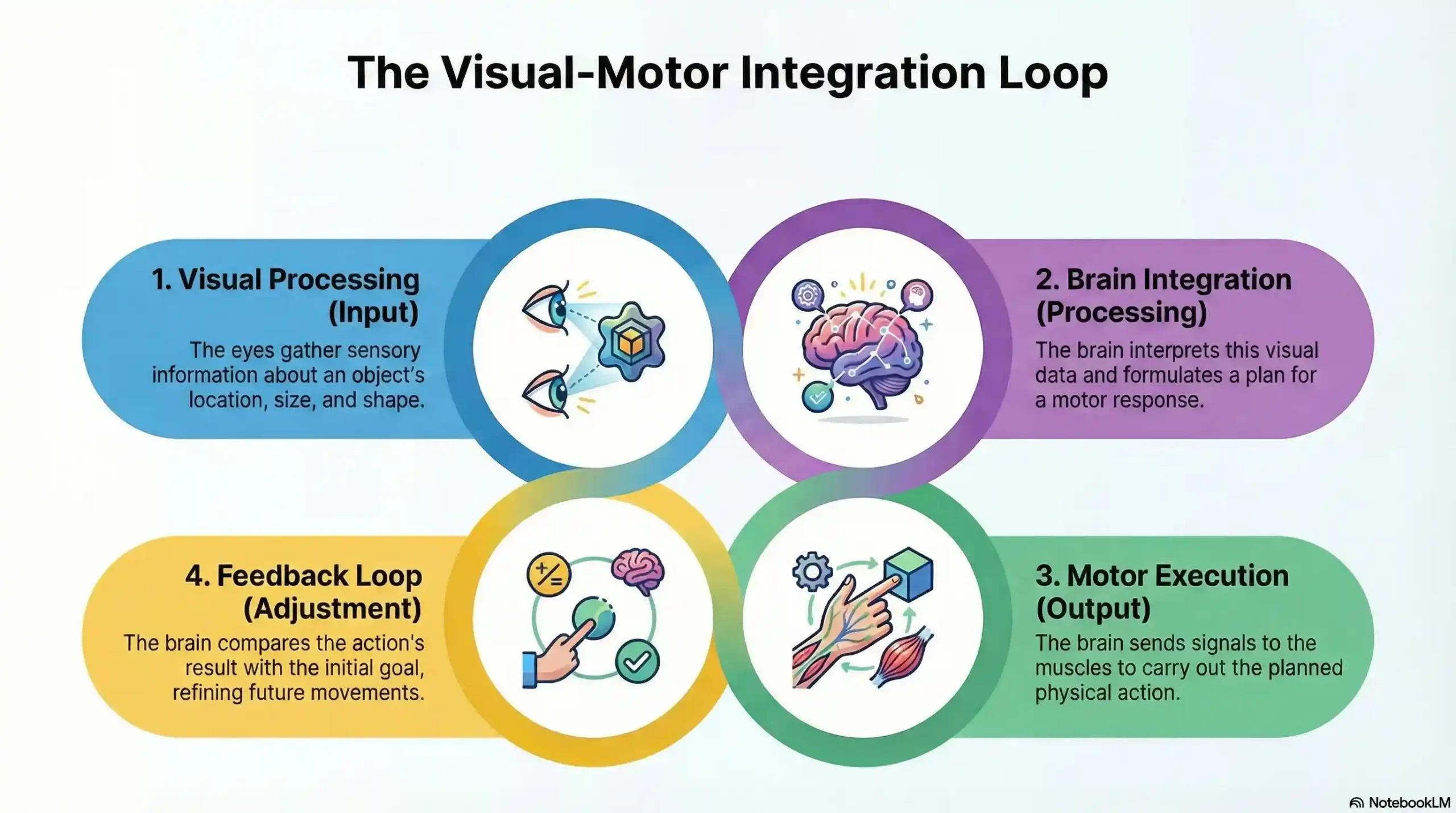
When you track a moving object and respond with coordinated movement—whether catching a ball, threading a needle, or hitting a tennis serve—multiple systems work in harmony:
- Visual Processing: Your eyes capture motion, depth, and spatial information
- Brain Integration: The visual cortex processes this data and coordinates with motor planning areas
- Motor Execution: Precise muscle movements execute the planned response
- Feedback Loop: Continuous visual monitoring adjusts movements in real-time
Key Insight: Research indicates that approximately 80% of athletic performance depends on visual processing, making hand-eye coordination critical not just for sports but for academic success, workplace efficiency, and daily living skills. This figure is supported by multiple recent studies, including research from the International Sports Vision Association and published findings in sports medicine journals.
Recognizing Poor Hand-Eye Coordination: Key Warning Signs
Many individuals struggle with coordination issues without realizing that the underlying cause stems from visual-motor deficiencies. Even those with 20/20 vision can experience significant hand-eye coordination problems, as the issue often lies in brain-eye communication rather than visual acuity alone.
Common Signs in Children:
- Difficulty catching or throwing balls accurately
- Messy handwriting or trouble staying within lines
- Avoiding sports or physical activities
- Difficulty with puzzles, building blocks, or fine motor tasks
- Frequent bumping into objects or people
- Struggle with copying from the board to paper
Common Signs in Adults:
- Headaches during reading or computer work
- Eye strain and fatigue from visual tasks
- Difficulty with night driving or judging distances
- Poor performance in recreational sports
- Trouble with tasks requiring precise movements
How Vision Therapy Transforms Hand-Eye Coordination
Vision therapy represents a revolutionary approach to improving visual-motor skills through scientifically designed exercises that literally rewire the brain-eye connection. Unlike traditional eye care that focuses solely on correcting vision clarity, vision therapy addresses the root neurological causes of coordination difficulties.
The Neuroplasticity Advantage
Modern neuroscience has revolutionized our understanding of brain plasticity—the ability to form new neural pathways throughout life. This breakthrough means that individuals of all ages, from young children to adults well past retirement, can dramatically improve their hand-eye coordination through targeted visual training.
Expert Quote: Dr. David Cook, with over 40 years of experience at Cook Vision Therapy Center in Atlanta, explains: “Vision therapy essentially teaches the brain and eyes to work together more efficiently. We’re not just treating symptoms—we’re creating permanent neurological changes that transform how patients interact with their world.”
Core Vision Therapy Techniques for Coordination
Professional vision therapy employs a multi-faceted approach combining specialized equipment, targeted visual training exercises, and progressive challenges:
1. Eye Movement Training
Saccadic exercises improve the eyes’ ability to make quick, accurate movements between targets. Patients practice tracking moving objects, following specific patterns, and shifting focus rapidly between near and far objects. These exercises strengthen the extraocular muscles and improve visual tracking precision.
2. Convergence and Divergence Training
Using tools like the Marsden Ball and specialized computer programs, patients learn to coordinate both eyes working together. Convergence insufficiency—difficulty focusing on close objects—affects approximately 2-13% of the population (with 5-7.5% being most commonly reported) and directly impacts hand-eye coordination.
3. Visual-Motor Integration Exercises
These activities combine visual processing with physical movement, such as catching balls of varying sizes and speeds, completing maze activities while tracking with eyes and hands, and using balance boards to integrate vision with proprioception.
4. Spatial Awareness Development
Three-dimensional activities help patients better judge distances and spatial relationships. Virtual reality systems and stereoscopic exercises enhance depth perception, crucial for accurate hand-eye coordination.
Scientific Evidence: Research Supporting Vision Therapy
Extensive peer-reviewed research validates vision therapy’s effectiveness for improving hand-eye coordination across diverse populations. Here are three landmark studies that demonstrate measurable improvements:
Study 1: Visual Impairment and Coordination Enhancement
A 2018 study published in the Journal of Ophthalmic Vision Research examined 35 visually impaired students receiving vision therapy versus 35 controls. Researchers used the Frostig test to measure eye-hand coordination before and after 18-20 training sessions using the Marsden ball technique, perceptual-motor pen, and computer-based exercises.
Results: The treatment group showed statistically significant improvements in hand-eye coordination (p<0.05) while maintaining stable visual acuity. Mean Frostig test scores improved from 22.74±4.32 to 24.69±3.99, representing meaningful functional improvement. The study confirmed that vision therapy specifically enhances coordination abilities independent of visual clarity improvements.
Study 2: Athletic Performance Enhancement
Research conducted at the University of California, Riverside, with the baseball team revealed remarkable performance improvements following vision therapy intervention. Players participated in specialized visual training focusing on tracking, reaction time, and depth perception.
Results: Players demonstrated significantly fewer strikeouts and increased runs batted in following vision therapy. The study documented measurable improvements in visual reaction time and tracking accuracy, directly correlating with enhanced game performance.
Study 3: Professional Athletes and Visual Training
A comprehensive 2020 analysis published in Archives of Pharmacy Practice investigated sports visual training effects on hand-eye coordination and depth perception among adults with impaired visual acuity. The quasi-experimental study tracked participants through 18-20 specialized training sessions.
Results: Vision therapy significantly improved eye-hand coordination in both error reduction (p=0.002) and error maintenance (p=0.012). Additionally, depth perception showed significant enhancement (p=0.001), confirming vision therapy’s effectiveness for multi-dimensional visual skill improvement.
Vision Therapy Treatment Programs: What to Expect
Professional vision therapy programs follow a structured, individualized approach designed to address specific coordination deficiencies while building comprehensive visual skills. Understanding the treatment process helps set realistic expectations and maximize outcomes.
Comprehensive Visual Assessment
Before beginning therapy, patients undergo a thorough evaluation extending far beyond standard eye charts. This assessment typically includes:
- Visual acuity testing at multiple distances
- Binocular vision coordination analysis
- Eye movement and tracking evaluation
- Depth perception and spatial awareness testing
- Visual processing speed assessment
- Hand-eye coordination baseline measurements
Treatment Timeline and Structure
Most vision therapy and visual training programs span 12-24 weeks, with sessions typically scheduled 2-3 times weekly for 45-60 minutes each. This intensive approach ensures consistent neuroplastic changes while allowing adequate recovery time between sessions.
Typical Program Structure:
Weeks 1-4: Foundation Building
Basic eye movement patterns, convergence training, and visual awareness exercises
Weeks 5-12: Skill Integration
Complex tracking activities, dynamic visual-motor tasks, and sport-specific movements
Weeks 13-20: Advanced Applications
Real-world task simulation, speed and accuracy challenges, and performance optimization
Weeks 21-24: Maintenance and Mastery
Skill reinforcement, independent practice strategies, and long-term maintenance planning
Home Exercise Programs
Successful vision therapy extends beyond clinical sessions through carefully prescribed home activities. These exercises, typically performed 15-20 minutes daily, reinforce skills learned during professional sessions and accelerate progress.
Common home exercises include pencil push-ups for convergence training, focus shifting between near and far targets, and specialized computer programs designed to improve visual processing speed and accuracy.
Life-Changing Benefits: Beyond Improved Coordination
While enhanced hand-eye coordination represents the primary goal, vision therapy patients frequently report unexpected improvements across multiple life domains. These comprehensive benefits reflect the interconnected nature of visual processing and overall neurological function.
Academic and Learning Improvements
Children with coordination difficulties often struggle academically, not due to learning disabilities but because of underlying visual processing issues. Vision therapy addresses these root causes, leading to remarkable educational transformations:
- Improved reading speed and comprehension
- Better handwriting quality and speed
- Enhanced attention and focus during studying
- Reduced homework time and frustration
- Improved performance on standardized tests
Athletic Performance Enhancement
Professional sports teams, including Major League Baseball’s Washington Nationals and Tampa Bay Rays, integrate vision therapy into training programs specifically for hand-eye coordination improvement. Research demonstrates measurable enhancements in:
- Reaction time and response speed
- Tracking accuracy for moving objects
- Depth perception and spatial judgment
- Peripheral vision awareness
- Overall sports confidence and performance
Professional and Daily Life Benefits
Adults experiencing coordination challenges often discover that vision therapy improves numerous aspects of daily functioning:
- Reduced eye strain during computer work
- Improved driving safety, especially at night
- Better balance and spatial awareness
- Enhanced fine motor skills for hobbies and work
- Increased confidence in physical activities
Real Success Stories: Transformative Results
The most compelling evidence for vision therapy’s effectiveness comes from patients whose lives have been dramatically transformed. These success stories, shared with permission, illustrate the profound impact of addressing hand-eye coordination through visual training.
Kevin’s Story: From Struggling Student to Confident Athlete
Nine-year-old Kevin began vision therapy after years of academic and athletic struggles. His mother reports:
“Kevin was behind his peer group in essentially every area requiring coordination and balance. After eight months of vision therapy, he excelled at the same vision tests that nearly brought him to tears initially. Most remarkably, he learned to ride a bike with confidence—something his younger sister had mastered years earlier.”
Kevin’s transformation extended beyond physical coordination to academic achievement and social confidence, demonstrating vision therapy’s comprehensive impact on child development.
Hans’s Baseball Transformation
Before vision therapy, Hans consistently missed fly balls due to apparent delay problems in visual processing. His coordination issues significantly impacted both school and sports performance. After several months of targeted vision therapy with minimal baseball practice during winter, Hans attended spring tryouts where he didn’t miss a single pop fly.
The recreation director commented that he had never witnessed such dramatic improvement in any player from one season to the next, highlighting the transformative power of addressing underlying visual-motor deficiencies.
Adult Success: Professional Performance Enhancement
A recent Cook Vision Therapy patient shared:
“For as long as I can remember, I’ve struggled with poor hand-eye coordination and clumsiness, which kept me from participating in sports. After six months of weekly therapy sessions, the improvements have been remarkable. I’m no longer bumping into things, and I’ve even started playing Pickleball! The transformation has given me confidence I never thought possible.”

Treatment Options and Investment: Making Vision Therapy Accessible
Understanding treatment options and financial considerations helps families and individuals make informed decisions about pursuing vision therapy for hand-eye coordination improvement.
Treatment Setting Options
In-Office Vision Therapy
Professional supervision ensures proper technique and maximizes results. Specialized equipment not available for home use, including computerized training systems, therapeutic lenses, and biofeedback devices, provides optimal training conditions. Most insurance plans offer some coverage for medically necessary vision therapy.
Hybrid Programs
Combining in-office sessions with structured home exercises offers cost-effective treatment while maintaining professional oversight. This approach typically reduces total program costs while extending practice opportunities for faster skill development.
Investment Considerations
Vision therapy represents a significant investment in long-term visual health and life quality. While costs vary by location and provider, comprehensive programs typically range from $1,000-$9,000 for complete treatment, with individual sessions costing $60-$250. Based on 2024-2025 data from leading centers, most programs fall in the $2,800-$4,000 range and require 20-30 sessions over 6-12 months. However, the lifetime benefits—improved academic performance, athletic achievement, and professional capabilities—often justify the investment.
Many providers offer payment plans, and health savings accounts (HSAs) typically cover vision therapy expenses. Additionally, some insurance plans provide partial reimbursement for medically necessary vision therapy, particularly for diagnosed conditions like convergence insufficiency or strabismus.
Age Considerations: When to Start Vision Therapy
One of the most encouraging aspects of vision therapy and visual training involves its effectiveness across all age groups. Contrary to outdated beliefs about critical periods, modern neuroscience confirms that neuroplasticity allows visual skill improvement throughout life.
Children and Adolescents
Early intervention provides optimal results, as developing brains demonstrate remarkable adaptability. Children as young as 4-5 years can participate in age-appropriate vision therapy programs, though most practitioners prefer beginning around age 6 when attention spans and cooperation levels support consistent treatment.
Adolescents often show rapid improvement due to increased motivation and cognitive maturity, making the teenage years an excellent time for vision therapy intervention.
Adults and Seniors
Research disproves the long-held misconception that adults cannot benefit from vision therapy. Many practitioners successfully treat patients well into their 70s and 80s, with adults often showing superior motivation and compliance compared to children.
Adults particularly benefit from vision therapy for computer-related eye strain, post-concussion rehabilitation, and age-related coordination decline. The key factor is not age but rather the willingness to commit to consistent practice and treatment.
Finding the Right Vision Therapy Provider
Selecting a qualified vision therapy provider significantly impacts treatment success. Not all eye care professionals offer specialized vision therapy, making careful provider selection crucial for optimal outcomes.
Key Provider Qualifications
- Board certification in behavioral or developmental optometry
- Specialized training in vision therapy techniques
- Experience treating your specific condition or age group
- Access to modern equipment and assessment tools
- Positive patient testimonials and success stories
- Clear treatment protocols and progress tracking systems
Questions to Ask Potential Providers
When consulting with vision therapy providers, consider asking:
- How many patients with my specific condition have you treated?
- What assessment tools do you use to measure progress?
- What is the typical treatment timeline for my situation?
- What home exercises will be required?
- Do you provide progress reports and objective measurements?
- What happens if I don’t see expected improvements?
The Future of Vision Therapy: Emerging Technologies
Vision therapy and visual training continue evolving with technological advances that enhance treatment precision and engagement. These innovations promise even better outcomes for hand-eye coordination improvement.
Virtual and Augmented Reality Integration
VR and AR technologies create immersive training environments impossible to replicate with traditional methods. These systems provide:
- Precise visual stimulus control and measurement
- Gamified exercises that improve patient engagement
- Real-time performance tracking and adjustment
- Customizable difficulty progression based on individual progress
Artificial Intelligence and Personalization
AI-powered systems analyze individual progress patterns to optimize treatment protocols automatically. These intelligent systems can identify subtle improvement trends and adjust exercise difficulty in real-time, ensuring optimal challenge levels for maximum neuroplastic response.
Key Research Citations Used in This Article
1. Impact of Vision Therapy on Eye-Hand Coordination Skills in Students with Visual Impairment
- Source: PMC – National Center for Biotechnology Information
- Link: https://pmc.ncbi.nlm.nih.gov/articles/PMC6058561/
- Key Finding: A Study of 35 visually impaired students showed statistically significant improvements in hand-eye coordination (p<0.05) after vision therapy using the Marsden ball technique and computer-based exercises. Mean Frostig test scores improved from 22.74±4.32 to 24.69±3.99.
- Relevance: Provides scientific evidence for vision therapy’s effectiveness in improving coordination independent of visual acuity improvements.
2. Convergence Insufficiency: Review of Clinical Diagnostic Signs
- Source: PMC – Published in Ophthalmic and Physiological Optics
- Link: https://www.ncbi.nlm.nih.gov/pmc/articles/PMC9537264/
- Key Finding: Convergence insufficiency affects approximately 7.5% of the population and is characterized by difficulty maintaining motor fusion at near distances, directly impacting hand-eye coordination.
- Relevance: Establishes prevalence data and diagnostic criteria for one of the most common binocular vision disorders affecting coordination.
3. Vision and Sports Performance – International Sports Vision Association
- Source: International Sports Vision Association (ISVA)
- Link: https://www.sportsvision.pro/athletes/vision-and-sports-performance/
- Key Finding: Research indicates that up to 80% of perceptual input in sports comes from the visual system, with visual skills including eye tracking, eye-hand coordination, visual memory, and depth perception being critical for athletic performance.
- Relevance: Supports the fundamental premise that visual processing dominates athletic performance and validates vision therapy’s role in sports enhancement.
Taking the Next Step: Your Journey to Improved Hand-Eye Coordination
Hand-eye coordination challenges need not define your limitations or your child’s potential. Vision therapy offers a scientifically-proven pathway to dramatic improvement, backed by decades of research and countless success stories from individuals who have transformed their lives through dedicated visual training.
Whether you’re seeking to help your child overcome academic struggles, enhance your athletic performance, or improve daily living skills as an adult, vision therapy and visual training provide hope and practical solutions. The journey requires commitment and persistence, but the rewards—improved confidence, enhanced capabilities, and better quality of life—make the investment worthwhile.
Ready to Begin Your Transformation?
If you recognize the signs of hand-eye coordination difficulties in yourself or a loved one, the first step involves a comprehensive vision evaluation by a qualified provider specializing in vision therapy. This assessment will reveal whether visual-motor deficiencies contribute to coordination challenges and outline potential treatment options.
For residents of Metro Atlanta and surrounding areas, Cook Vision Therapy Center offers the expertise of Dr. David Cook and Dr. Ekta Patel, bringing over 40 years of combined experience in transforming lives through vision therapy. Their specialized focus on non-surgical treatments and proven track record with thousands of patients make them leaders in the field.
Remember: Improved hand-eye coordination is not just about better sports performance or academic success—it’s about unlocking your full potential and discovering capabilities you never knew you possessed. The research is clear, the techniques are proven, and the success stories speak for themselves. Your journey to enhanced visual performance and improved quality of life can begin today.
FAQs
-
Vision therapy is a personalized treatment program using specialized exercises, tools, and techniques to strengthen eye muscles, improve visual tracking, and enhance how eyes and hands work together for precise movements.