Early Warning Signs of Vertical Heterophoria Most People Miss

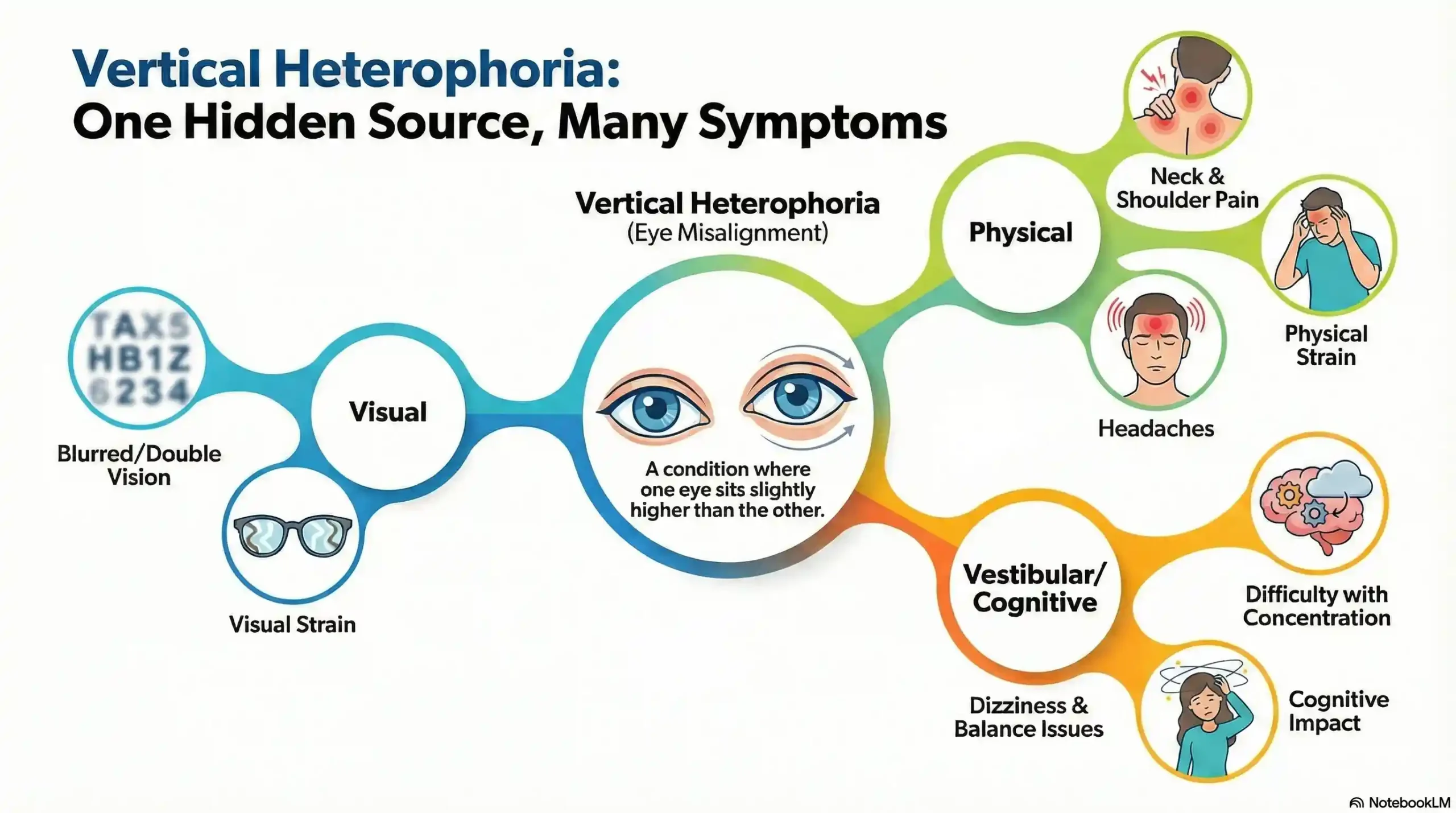
If you struggle with persistent dizziness, headaches, or neck pain that traditional treatments can’t fix, you may be experiencing Vertical Heterophoria (VH)—a subtle eye misalignment that is frequently misdiagnosed. This guide breaks down the early warning signs of VH and how specialized prism lenses can provide immediate relief.
⮕ [Take the 5-Minute Binocular Vision Dysfunction Test]
Key Takeaways
- Vertical heterophoria causes misalignment of the eyes, leading to various visual and physical symptoms.
- Common symptoms include blurred or double vision, headaches, and eye strain.
- It can result in difficulty concentrating and challenges with depth perception.
- Physical discomfort such as neck and shoulder pain often accompanies the condition.
- Sensitivity to light, dizziness, or vertigo are additional signs to watch for.
Blurred or Double Vision
One of the hallmark symptoms of vertical heterophoria is blurred or double vision, which can manifest in various ways. Individuals may experience intermittent double vision, where objects appear duplicated, or they may find that their vision becomes blurry, particularly when focusing on distant objects. This phenomenon occurs because the brain struggles to fuse the images from each eye into a single coherent picture due to the misalignment.
As a result, the brain may receive conflicting signals, leading to confusion and visual discomfort. The impact of blurred or double vision on daily activities can be profound. Tasks such as reading, driving, or even watching television can become challenging and frustrating.
For instance, a person with vertical heterophoria might find that they have to close one eye to read a book comfortably or that they struggle to maintain focus on a moving object while driving. This constant adjustment can lead to fatigue and exacerbate other symptoms associated with the condition. Understanding the nature of these visual disturbances is essential for individuals seeking effective treatment and management strategies.
Headaches and Eye Strain
Headaches are another common symptom associated with vertical heterophoria, often resulting from the strain placed on the eye muscles as they attempt to compensate for the misalignment. The constant effort to align the images from both eyes can lead to tension in the forehead, temples, and back of the head. These headaches can vary in intensity and frequency, with some individuals experiencing them daily while others may have episodic headaches triggered by specific activities or visual tasks.
Eye strain is closely linked to these headaches and can manifest as discomfort or fatigue in the eyes after prolonged periods of visual concentration. Individuals may notice that their eyes feel heavy or tired after reading for just a short time or using a computer. This strain can be exacerbated by poor lighting conditions or improper screen distance, making it essential for those with vertical heterophoria to be mindful of their visual environment.
Addressing these symptoms often requires a multifaceted approach, including proper lighting, regular breaks during visual tasks, and potentially corrective lenses designed to alleviate strain.
Difficulty Concentrating
The cognitive effects of vertical heterophoria extend beyond visual disturbances; many individuals report difficulty concentrating as a significant challenge. The brain’s effort to reconcile conflicting visual information can lead to mental fatigue, making it hard to focus on tasks that require sustained attention. This difficulty can be particularly pronounced in environments with multiple stimuli, such as busy workplaces or crowded classrooms, where distractions abound.
Moreover, this cognitive overload can affect academic performance and workplace productivity. Students may find it challenging to keep up with lectures or complete assignments due to their inability to concentrate effectively. Similarly, adults in professional settings may struggle with tasks that require prolonged focus, leading to decreased efficiency and increased frustration.
Recognizing this aspect of vertical heterophoria is crucial for developing coping strategies and seeking appropriate interventions that address both visual and cognitive symptoms.
Neck and Shoulder Pain
The physical manifestations of vertical heterophoria often extend beyond the eyes and head, with many individuals experiencing neck and shoulder pain as a result of compensatory postures adopted to alleviate visual discomfort. When one eye is misaligned, individuals may unconsciously tilt their heads or hunch their shoulders in an attempt to achieve clearer vision. Over time, these compensatory movements can lead to muscle tension and pain in the neck and shoulders.
This pain can become chronic if left unaddressed, impacting overall quality of life. Individuals may find themselves relying on over-the-counter pain relievers or seeking physical therapy to manage their discomfort. Additionally, poor posture resulting from compensatory behaviors can lead to further musculoskeletal issues, creating a cycle of pain that is difficult to break.
Understanding the connection between vertical heterophoria and physical discomfort is essential for developing comprehensive treatment plans that address both visual alignment and musculoskeletal health.
Dizziness or Vertigo

Dizziness or vertigo is another symptom that can accompany vertical heterophoria, stemming from the brain’s struggle to process conflicting visual information. When the eyes are not aligned properly, it can create a sense of imbalance or disorientation, leading individuals to feel lightheaded or as if they are spinning. This sensation can be particularly distressing and may occur in conjunction with other symptoms such as headaches or nausea.
The experience of dizziness can significantly impact daily life, making it difficult for individuals to engage in activities that require balance or coordination. For example, someone with vertical heterophoria might find it challenging to navigate crowded spaces or participate in physical activities like sports without feeling unsteady. In some cases, this dizziness may be mistaken for other conditions such as vestibular disorders, highlighting the importance of accurate diagnosis and treatment tailored specifically for those with vertical heterophoria.
Sensitivity to Light
Sensitivity to light, also known as photophobia, is a common complaint among individuals with vertical heterophoria. This heightened sensitivity can make bright environments uncomfortable and may lead individuals to squint or seek out shaded areas to alleviate discomfort. The underlying cause of this sensitivity often relates to the strain placed on the visual system due to misalignment; bright lights can exacerbate existing symptoms such as headaches and eye strain.
In practical terms, sensitivity to light can affect various aspects of life, from choosing appropriate lighting for workspaces to selecting sunglasses for outdoor activities. Individuals may find themselves avoiding certain environments altogether—such as brightly lit offices or outdoor events—due to their discomfort. Understanding this symptom is crucial for developing effective coping strategies, such as using specialized lenses that filter out harsh light or adjusting workspaces to minimize glare.
Difficulty with Depth Perception
Depth perception is a critical aspect of visual processing that allows individuals to judge distances accurately and navigate their environment safely. In cases of vertical heterophoria, depth perception can be compromised due to the misalignment of the eyes. When one eye is positioned higher than the other, the brain struggles to integrate visual information from both eyes effectively, leading to challenges in perceiving depth accurately.
This difficulty can manifest in various ways, such as trouble judging distances when reaching for objects or navigating stairs. For instance, someone with vertical heterophoria might find themselves overreaching or underreaching when trying to grab an item off a shelf or misjudging the height of steps when walking. Such challenges can lead to increased risk of falls or accidents, particularly in unfamiliar environments where spatial awareness is crucial.
Addressing depth perception issues often requires targeted interventions that focus on improving binocular vision and enhancing overall visual processing skills. In summary, vertical heterophoria presents a complex interplay of visual and physical symptoms that can significantly impact an individual’s quality of life. From blurred vision and headaches to neck pain and difficulty concentrating, understanding these manifestations is essential for effective diagnosis and treatment.
By recognizing the multifaceted nature of this condition, individuals can seek appropriate interventions that address both their visual needs and overall well-being.
In understanding the early warning signs of vertical heterophoria that many people overlook, it’s essential to consider related conditions that can contribute to visual discomfort. For instance, the article on headaches and eye strain provides valuable insights into how these symptoms may be linked to binocular vision dysfunction (BVD), which can often coexist with vertical heterophoria. Recognizing these connections can lead to more effective management and treatment options for those experiencing visual disturbances.
FAQs
-
Vertical Heterophoria is a binocular vision disorder where the eyes have a vertical misalignment, causing one eye to be slightly higher or lower than the other. This misalignment can lead to symptoms such as headaches, dizziness, and eye strain.