Eye Fatigue vs. Visual Processing Issues: Knowing the Difference
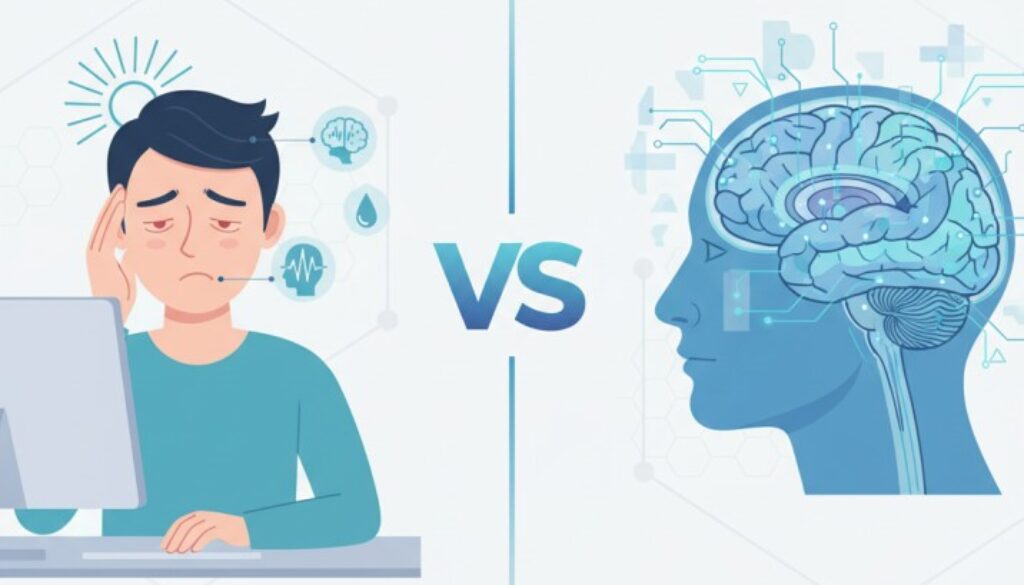
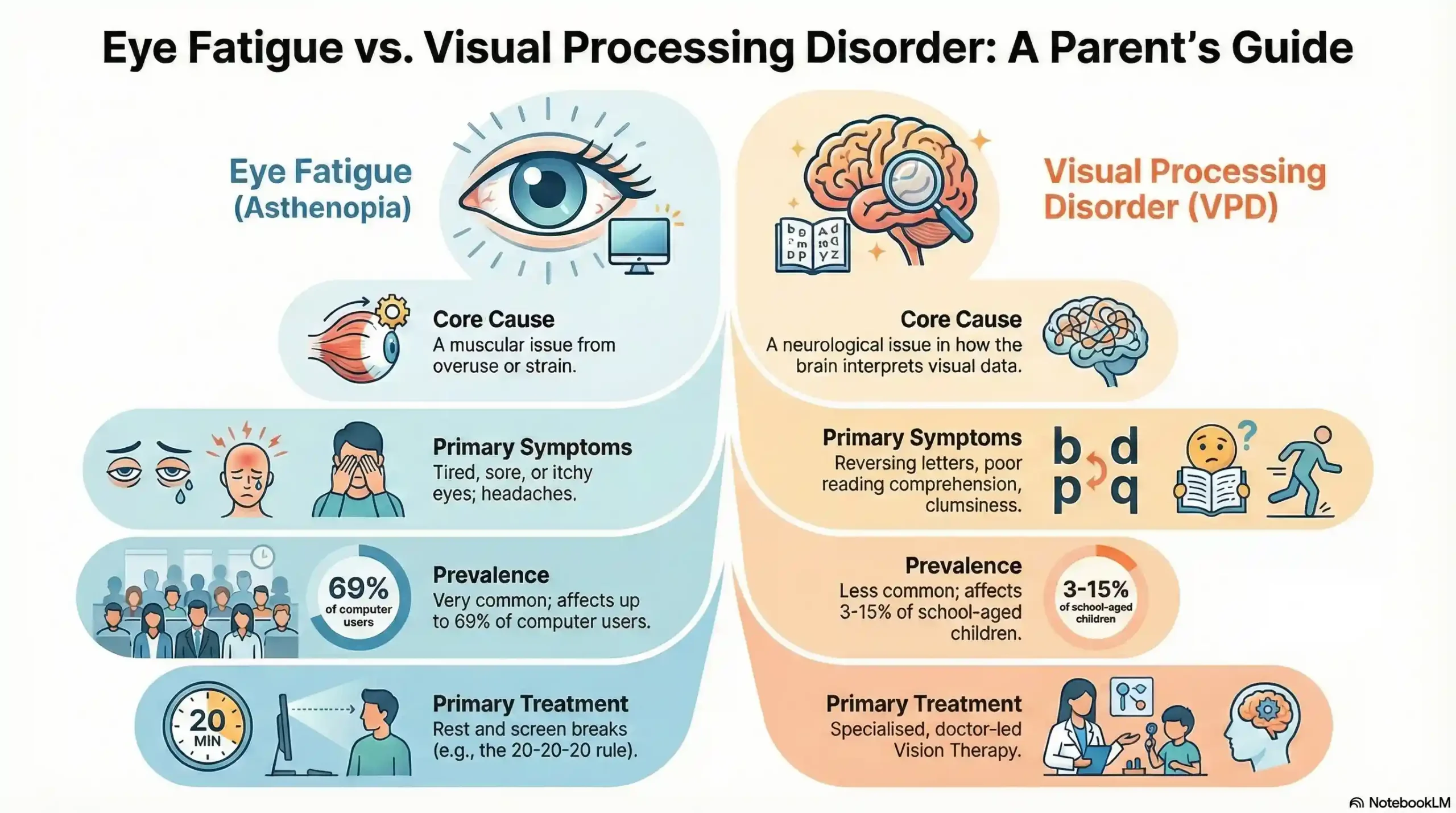
The primary difference between eye fatigue and a visual processing disorder is that eye fatigue is a temporary muscular strain caused by overwork (like screen time), while a visual processing disorder is a neurological condition where the brain struggles to interpret what the eyes see clearly. While both cause headaches and blurred vision, eye fatigue typically resolves with rest, whereas visual processing issues require specialized vision therapy to retrain the brain-eye connection. At Cook Vision Therapy Center, Dr. David Cook uses 40+ years of expertise to diagnose these distinct conditions and provide evidence-based relief for Metro Atlanta families.
Schedule a Comprehensive Developmental Vision Evaluation
Understanding Eye Fatigue: Modern Challenges Requiring Expert Care
What Is Eye Fatigue?
Eye fatigue, medically termed asthenopia, occurs when the visual system becomes overworked during sustained, demanding tasks. In our practice at Cook Vision Therapy Center, we’ve seen a dramatic increase in eye fatigue cases, particularly since the COVID-19 pandemic shifted more work and learning online.
Recent research from 2024-2025 reveals significant statistics about digital eye strain prevalence. A comprehensive literature review published in 2025 found that computer vision syndrome affects 69% of the population globally, with university students showing even higher rates at 76.1%. During the pandemic, studies showed up to 74% of participants experiencing symptoms due to increased remote work and online learning.
Primary Symptoms We See Daily
Based on Dr. Cook’s 40+ years of clinical experience and our comprehensive patient evaluations, eye fatigue typically presents with:
Ocular (Eye-Related) Symptoms:
- Tired, heavy-feeling eyes
- Dry or watery eyes
- Burning or stinging sensations
- Blurred or double vision
- Light sensitivity
- Difficulty focusing
Extraocular (Body-Related) Symptoms:
- Headaches, particularly around temples or the forehead
- Neck and shoulder pain
- General fatigue and tiredness
- Difficulty concentrating
- Increased irritability
Modern Causes: What We’re Treating Today
At Cook Vision Therapy Center, we’ve identified the primary culprits in today’s eye fatigue epidemic through our comprehensive patient assessments:
Digital Screen Usage: Our evaluations consistently show that prolonged device use triggers several physiological changes:
- Reduced Blink Rate: Studies show humans blink approximately 50% less when using computers (14.9 blinks per minute vs. 13.6 during reading)
- Accommodation Stress: The eye’s focusing muscle works continuously to maintain a clear vision of pixelated text
- Blue Light Exposure: Recent Cochrane systematic reviews found that blue light filtering glasses provide minimal benefits for reducing eye fatigue
- Poor Ergonomics: Incorrect viewing distances and angles force the visual system to work harder
Environmental Factors we address in our treatment protocols include inadequate lighting, glare and reflections from screens, air conditioning directed at the eyes, and low-humidity environments.
Visual Processing Disorder: Cook Vision Therapy Center’s Specialty
Our Expertise in Complex Visual Challenges
Visual processing disorder (VPD) represents the core of Cook Vision Therapy Center’s specialized practice. Unlike traditional eye care that focuses on visual acuity, our exclusive dedication to vision therapy allows us to address how the brain interprets visual information—a critical distinction that sets us apart in the Atlanta metro area.
Dr. David Cook’s four decades of experience have shown that visual processing disorders affect approximately 3-15% of the population, with recent studies suggesting up to 3.4% of children in mainstream schools may experience visual perceptual difficulties. However, the exact prevalence remains difficult to determine due to diagnostic challenges and the condition often being overlooked or misattributed to other learning disorders.
The Cook Vision Therapy Center Approach
Our comprehensive understanding of visual processing goes beyond what the eyes see to how the brain processes that information. Think of visual processing as the brain’s ability to make sense of visual input. When these systems don’t work efficiently, even simple visual tasks become challenging and exhausting—a pattern we recognize immediately during our specialized evaluations.
Types of Visual Processing Difficulties We Treat
Visual Discrimination Issues Our patients often struggle with distinguishing between similar visual stimuli, such as confusing letters like ‘b’ and ‘d or difficulty differentiating between similar shapes or objects.
Visual Sequential Memory Problems We frequently see difficulty remembering the order of visual information, including trouble remembering letter sequences in words or copying information from the board in the correct order.
Visual Spatial Processing Challenges: Many of our patients struggle with understanding spatial relationships, including difficulty with concepts like left/right, up/down, and problems with depth perception and judging distances.
Visual Motor Integration Difficulties. Our therapy programs address coordination between visual information and motor movements, helping patients with poor handwriting despite adequate fine motor skills or trouble with ball sports.
Patient Profiles: Who We Help
At Cook Vision Therapy Center, we commonly see:
- Students with reading difficulties despite normal intelligence
- Children who frequently lose their place while reading
- Students are struggling to copy from the board
- Those avoiding visually demanding tasks
Daily Life Impacts:
- Difficulty organizing personal belongings
- Problems with navigation and direction
- Challenges with arts and crafts activities
- Trouble with visual attention to detail
- Fatigue after visual tasks (different from eye fatigue)
- Frustration with homework or reading
- Preference for verbal over written instructions
- Acting-out behaviors that may mask visual struggles

Professional Diagnosis: The Cook Vision Therapy Center Difference
Comprehensive Developmental Vision Evaluation
At Cook Vision Therapy Center, we provide what standard eye exams cannot: a comprehensive developmental vision evaluation that goes far beyond the 20/20 measurement. Our specialized assessment includes:
- Visual efficiency skills: How well the eyes work together, focus, and track
- Visual processing abilities: How effectively the brain interprets visual information
- Visual-motor integration: How vision coordinates with movement
- Visual perceptual skills: The brain’s ability to understand and organize visual input
Dr. Cook’s Evidence-Based Treatment Protocols
For Eye Fatigue Relief: Our immediate intervention strategies include environmental modifications, ergonomic workstation setup, and vision hygiene education. We also provide:
- Prescription glasses for uncorrected refractive errors when needed
- Specialized computer vision lenses
- Treatment of underlying dry eye conditions
- The 20-20-20 rule implementation strategies
For Visual Processing Disorder: Our signature vision therapy programs represent specialized treatment designed specifically for visual processing disorder. Unlike glasses that simply correct refractive errors, our evidence-based vision therapy trains the brain and eyes to work together more effectively.
Cook Vision Therapy Center’s Treatment Components
Proven Evidence-Based Elements:
- Eye movement training to improve tracking and scanning
- Focusing exercises to enhance accommodation flexibility
- Binocular vision training for better eye teaming
- Visual processing activities to strengthen interpretation skills
- Integration exercises combining vision with movement
Treatment Timeline: Most of our vision therapy programs require 12-24 weeks of structured activities, including:
- Weekly in-office sessions with our vision therapists
- Daily home exercises (15-30 minutes)
- Progress monitoring and program adjustments
- Integration with academic or occupational demands
When to Contact Cook Vision Therapy Center
Red Flags Requiring Professional Evaluation
For Eye Fatigue Concerns: Contact our Marietta office if you experience:
- Symptoms that worsen progressively despite interventions
- Associated nausea or dizziness
- Persistent blurred vision that doesn’t clear with blinking
- Pain extending beyond the eyes to the head or neck
- Symptoms affecting only one eye
For Visual Processing Disorder Assessment: Schedule a comprehensive evaluation if you notice:
- Academic performance is declining despite effort and intelligence
- Avoidance of reading or visually demanding tasks
- Frequent “careless” mistakes in visual tasks
- Persistent letter or number reversals beyond age 7
- Difficulty with activities requiring visual-motor coordination
The Cook Vision Therapy Center Advantage
Dr. David Cook’s Expertise: With over 40 years of specialized experience, Dr. Cook brings unmatched expertise in vision development and visual information processing to Metro Atlanta families.
Exclusive Specialization: Unlike general eye care practices, Cook Vision Therapy Center focuses exclusively on vision therapy and developmental optometry—no routine eye exams or glasses sales to distract from our core mission.
Proven Results: Our evidence-based approach, combined with Dr. Cook’s extensive clinical experience, has helped thousands of patients overcome visual processing challenges and achieve improved academic and professional performance.
Convenient Atlanta Location: Serving families throughout Metro Atlanta, including Marietta, Roswell, Duluth, Sandy Springs, and surrounding communities.
Resources and Citations
1. Computer Vision Syndrome: A Comprehensive Literature Review (2025)
Source: Taylor & Francis Online – Journal of Optometry
Link: https://www.tandfonline.com/doi/full/10.1080/20565623.2025.2476923
2. Blue-Light Filtering Spectacles and Digital Eye Strain – Cochrane Review (2024)
Source: Cochrane Eyes and Vision – Systematic Review
Link: https://www.cochrane.org/news/blue-light-filtering-spectacles-probably-make-no-difference-eye-strain-eye-health-or-sleep
3. Visual Perceptual Difficulties in School Children – PMC Research (2024)
Source: PubMed Central – Frontiers in Human Neuroscience
Link: https://pmc.ncbi.nlm.nih.gov/articles/PMC11656488/
Your Next Steps with Cook Vision Therapy Center
Immediate Actions You Can Take
- Document Symptoms: Keep a detailed log of when and how visual difficulties occur
- Try Basic Interventions: Implement proper screen ergonomics and the 20-20-20 rule
- Schedule Professional Evaluation: Contact Cook Vision Therapy Center for a comprehensive assessment
- Consider Educational Support: Discuss concerns with teachers and school support teams
What to Expect During Your Visit
Initial Consultation:
- Comprehensive history of symptoms and development
- Discussion of academic or work-related challenges
- Review of previous vision care and interventions
Specialized Testing:
- Visual-motor integration assessments
- Visual memory and sequential processing evaluation
- Binocular vision and eye movement analysis
- Assessment of visual attention and discrimination
Treatment Planning:
- Detailed explanation of findings specific to your case
- Discussion of personalized treatment options and timelines
- Coordination with other healthcare providers or educators when needed
- Establishment of progress monitoring protocols
The Cook Vision Therapy Center Promise
At Cook Vision Therapy Center, we understand that visual challenges affect the entire family. Our compassionate, family-centered approach combines Dr. Cook’s four decades of expertise with the latest evidence-based treatment methods to provide life-changing results for children and adults struggling with vision-related learning and performance issues.
Whether you’re dealing with screen-related eye strain or complex visual processing challenges, our specialized team is here to help you achieve comfortable, efficient vision that supports your daily activities and long-term goals.
Contact Cook Vision Therapy Center today to schedule your comprehensive vision evaluation and take the first step toward visual comfort and improved performance.
FAQs
-
Eye fatigue is muscular tiredness from prolonged visual tasks like screen use, while visual processing issues involve the brain’s difficulty interpreting visual information despite normal eye function.