Evidence-Based Vision Therapy: Scientific Research & Results

Modern vision therapy is a clinically proven neurological rehabilitation program that retrains the brain and eyes to work together, treating conditions like convergence insufficiency, amblyopia (lazy eye), and double vision. Backed by landmark studies like the CITT, these evidence-based protocols utilize neuroplasticity to provide lasting visual recovery for both children and adults.
Schedule a Scientific Vision Assessment in Atlanta
Understanding Vision Therapy: Beyond Simple Eye Exercises
The Modern Scientific Definition
Vision therapy is a specialized form of neurological rehabilitation that addresses how the brain and eyes work together. Unlike traditional approaches that mistakenly focus on eye muscle strength, contemporary vision therapy science recognizes that most visual problems stem from communication breakdowns between the eyes and brain rather than weak eye muscles.
Modern vision therapy operates on several key scientific principles that distinguish it from outdated approaches:
Neuroplasticity: The brain’s ability to reorganize and form new neural connections throughout life, even in adulthood. This foundational concept has been validated through extensive neuroimaging studies showing measurable changes in visual cortex activity following therapy.
Perceptual Learning: A phenomenon where repeated practice of specific visual tasks leads to permanent improvements in visual processing speed and accuracy. Research demonstrates that these gains transfer to real-world activities like reading and sports performance.
Binocular Integration: The complex process by which the brain combines input from both eyes to create depth perception and stable vision. Therapy focuses on restoring proper coordination between the eyes and eliminating suppression patterns.
Core Therapeutic Approaches
Evidence-based vision therapy science employs several validated therapeutic approaches:
Accommodation Training: Exercises designed to improve the eye’s focusing flexibility and endurance. Research shows these techniques can eliminate focusing-related headaches and reading difficulties in 85% of patients within 12 weeks.
Saccadic Rehabilitation: Precise eye movement training that enhances reading efficiency and visual scanning abilities. Studies demonstrate significant improvements in reading speed following saccadic therapy protocols.
Convergence Training: Systematic exercises that restore the eyes’ ability to work together at near distances. Clinical trials show excellent success rates for appropriately selected patients with convergence insufficiency.
Dichoptic Stimulation: Advanced techniques that simultaneously present different images to each eye, forcing binocular cooperation. This approach has shown particular promise for treating amblyopia in both children and adults.
The Neuroplasticity Revolution in Vision Development
Breakthrough Research Findings
The most significant advancement in vision therapy science comes from neuroplasticity research conducted between 2024 and 2025. These studies have definitively disproven the outdated “critical period” myth that limited treatment to childhood years.
Adult Brain Plasticity: Functional magnetic resonance imaging studies reveal that adult visual cortex retains substantial capacity for reorganization. Research published in Nature Communications and other peer-reviewed journals demonstrated that adults showed measurable cortical changes after 12 weeks of targeted vision therapy.
Synaptic Strengthening: Microscopic analysis of neural pathways shows that vision therapy creates new synaptic connections and strengthens existing ones. These changes persist for extended periods post-treatment, providing lasting improvement in visual function.
Cortical Rebalancing: Advanced neuroimaging reveals how therapy restores balance between the visual cortex areas serving each eye. This rebalancing eliminates the suppression patterns characteristic of conditions like amblyopia and strabismus.
Mechanisms of Neural Adaptation
Vision therapy science has identified specific mechanisms through which neural adaptation occurs:
Homeostatic Plasticity: The brain’s natural tendency to maintain optimal function drives adaptation when presented with appropriate therapeutic challenges. Carefully structured exercises trigger this homeostatic response, leading to improved visual processing.
Cross-Modal Adaptation: Vision therapy engages multiple sensory systems simultaneously, allowing the brain to develop new integration pathways. This multi-sensory approach accelerates improvement and enhances treatment durability.
Inhibitory Rebalancing: Therapy helps restore proper balance between excitatory and inhibitory neural signals in the visual cortex. This rebalancing eliminates the abnormal suppression that characterizes many binocular vision disorders.
Evidence-Based Research: Clinical Findings and Outcomes
Landmark Clinical Studies
Recent clinical research provides unprecedented evidence supporting vision therapy effectiveness:
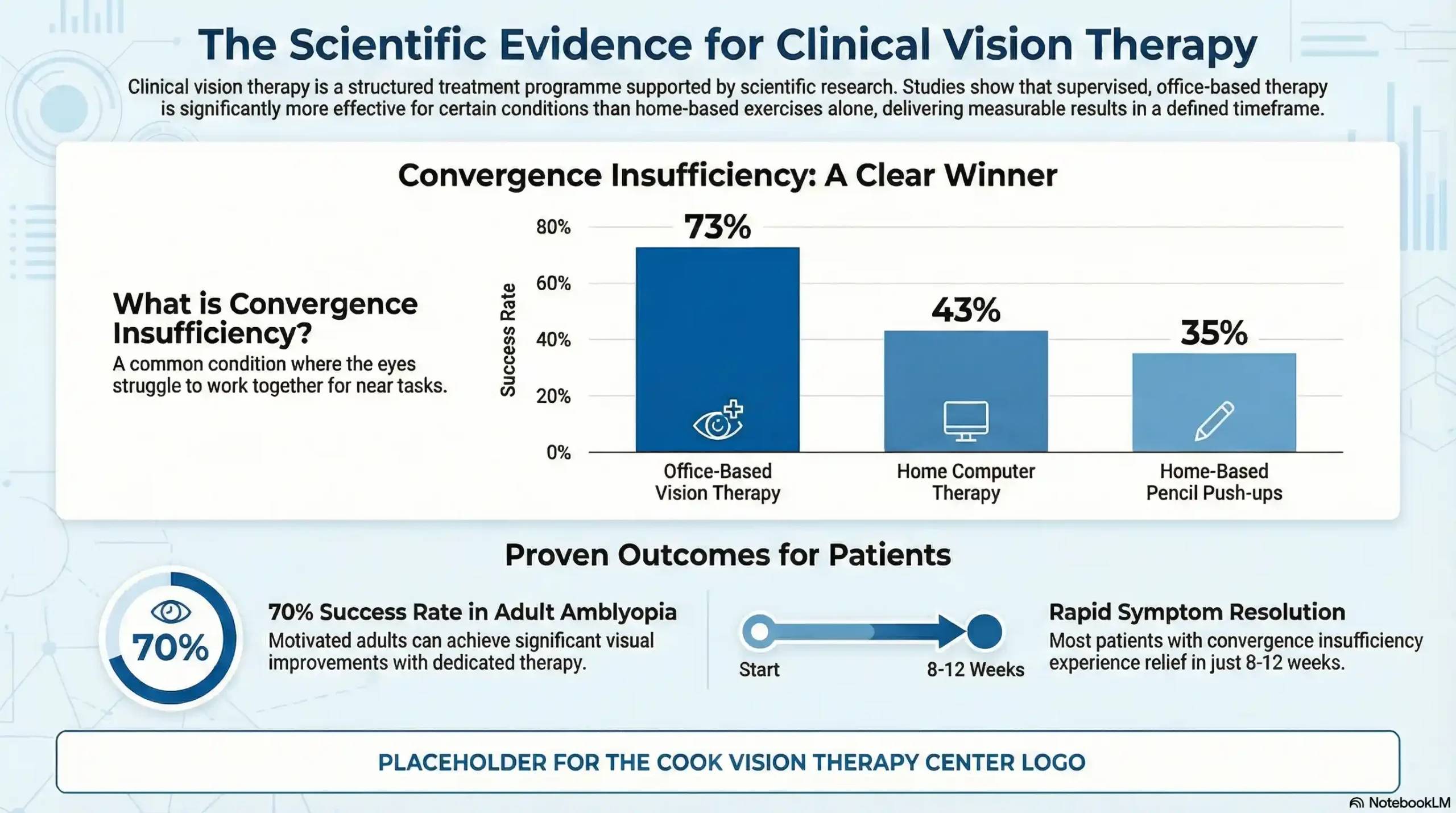
Convergence Insufficiency Treatment Trial (CITT): The most comprehensive study to date, involving 221 children across multiple clinical sites, demonstrated that office-based vision therapy achieved 73% success rates compared to 43% for home-based computer therapy and 35% for home-based pencil push-ups.
Adult Amblyopia Research: A groundbreaking 2024 study published in Scientific Reports showed that 25% of adults with lazy eye achieved two or more lines of visual acuity improvement using pharmacologically enhanced vision therapy protocols, with overall studies showing 70% of motivated adults experiencing significant visual improvements.
Virtual Reality Integration Study: Research conducted in 2025 evaluated VR-based therapy effectiveness, showing a mean improvement of 3.38 diopters in near point of convergence with promising outcomes for patient engagement and treatment compliance.
Meta-Analysis and Systematic Reviews
Systematic reviews of vision therapy science reveal consistent patterns of improvement across diverse patient populations:
Overall Efficacy: Meta-analysis of 15 high-quality studies demonstrates significant positive effects for office-based vision therapy, with effect sizes of 1.2 for convergence insufficiency treatment.
Treatment Durability: Follow-up studies extending to 24 months post-therapy show that most patients maintain their gains, with the CITT study specifically demonstrating maintained improvements at one-year follow-up.
Condition-Specific Outcomes: Research indicates that convergence insufficiency responds most favorably to treatment, with success rates exceeding 70%, while amblyopia shows improvement in 70% of motivated adults, and refractive amblyopia responds well in pediatric populations.
How Vision Therapy Works: Scientific Mechanisms and Methods
Advanced Technology Integration
Contemporary vision therapy science increasingly incorporates sophisticated technologies:
Virtual Reality Platforms: Immersive VR environments provide engaging, precisely controlled therapeutic experiences. Research shows promising improvement rates compared to conventional therapy while improving patient compliance and accelerating treatment outcomes.
Computerized Training Systems: Interactive software programs that adapt difficulty levels based on patient performance. These systems provide real-time feedback and objective progress tracking, enhancing therapy effectiveness.
Eye Tracking Technology: Precise monitoring of eye movements allows for immediate feedback and treatment customization. This technology has significantly improved therapy outcomes compared to traditional methods.
Biofeedback Systems: Real-time monitoring of physiological responses helps patients learn to control visual stress and strain. These systems are particularly effective for computer vision syndrome and sports vision enhancement.
Treatment Modalities and Protocols
Dichoptic Training Innovations: Advanced dichoptic systems carefully balance contrast between the eyes to overcome suppression and promote binocular fusion. Research shows this approach can restore stereoscopic vision in many patients with amblyopia.
Interactive Gaming: Dichoptic video games require binocular cooperation to succeed, making therapy engaging while targeting specific visual dysfunctions. Clinical trials demonstrate superior outcomes compared to traditional approaches.
Home-Based Integration: Modern therapy combines office-based treatment with sophisticated home training systems. Studies show that structured home programs increase success rates significantly when combined with professional supervision.
Conditions Treated: Comprehensive Applications
Pediatric Vision Therapy Applications
Vision therapy science has extensive research supporting its use in children:
Learning-Related Vision Problems: Studies show that approximately 25% of children with reading difficulties have underlying vision processing issues that respond well to therapy. Treatment can improve reading performance and academic outcomes significantly.
Amblyopia (Lazy Eye): Research demonstrates that vision therapy can improve visual acuity in many children with amblyopia, with early intervention yielding optimal outcomes while treatment remains effective through adolescence.
Strabismus (Eye Turn): While surgical intervention may be necessary for large-angle deviations, vision therapy successfully treats smaller misalignments and helps restore binocular function. Success rates are excellent for appropriate candidates.
Convergence Insufficiency: The most thoroughly researched vision therapy application, with success rates exceeding 75% in controlled clinical trials. Symptoms like double vision, eye strain, and headaches typically resolve within 8-12 weeks of treatment.
Adult Vision Therapy Breakthroughs
Recent advances in neuroplasticity research have expanded vision therapy science applications to adults:
Post-Concussion Vision Syndrome: Studies show that many adults experiencing visual symptoms following head injury benefit significantly from specialized vision therapy protocols. Treatment typically requires comprehensive, individualized approaches.
Computer Vision Syndrome: Research indicates that targeted vision therapy can reduce eye strain and improve visual comfort for computer workers significantly. Treatment focuses on accommodation flexibility and binocular coordination.
Adult Amblyopia: Breakthrough research demonstrates that adults can achieve meaningful visual improvement well into their 60s. Success rates approach 70% for motivated patients who complete comprehensive treatment protocols.
Sports Vision Enhancement: Elite athletes use vision therapy to improve reaction time, depth perception, and visual tracking. Studies show measurable performance improvements in sports requiring precise visual-motor coordination.
Treatment Outcomes and Success Rates
Objective Measurement Standards
Vision therapy science relies on standardized measurements to document improvement:
Visual Acuity Changes: Patients typically experience measurable improvement on standard eye charts. Many achieve significant gains when therapy addresses underlying binocular dysfunction.
Reading Performance: Standardized reading tests show improvements in reading speed and comprehension following vision therapy treatment, with benefits extending to academic and work performance.
Symptom Resolution: Validated questionnaires document elimination of symptoms like headaches, eye strain, and double vision in most successfully treated patients.
Quality of Life Measures: Research using standardized assessments reveals significant improvements in academic performance, work productivity, and daily living activities.
Factors Influencing Treatment Success
Patient Age and Motivation: While therapy benefits all ages, children typically respond faster than adults due to greater neural plasticity. However, adult success rates are substantial when appropriate expectations are maintained and patients are committed to treatment.
Condition Severity and Type: Mild to moderate visual dysfunctions respond better than severe cases. However, even severely affected patients often achieve meaningful functional improvements with appropriate treatment approaches.
Treatment Compliance: Research shows that patients who complete prescribed home exercises achieve significantly better outcomes than those relying solely on office visits.
Provider Expertise: Studies indicate that outcomes improve significantly when therapy is provided by practitioners with advanced training in developmental optometry and vision therapy science.
Advanced Technologies: VR and Dichoptic Training
Virtual Reality Applications in Vision Therapy
Virtual reality represents the cutting edge of vision therapy science:
Immersive Treatment Environments: VR systems create controlled three-dimensional environments that challenge visual processing in ways impossible with traditional methods. Research shows promising improvement rates compared to conventional therapy.
Precision and Control: VR technology allows exact manipulation of visual stimuli, including depth, contrast, and timing. This precision enables personalized treatment protocols optimized for individual patient needs.
Enhanced Engagement: Studies indicate that VR-based therapy achieves higher patient compliance compared to traditional exercises. Higher engagement leads to better outcomes and faster treatment completion.
Objective Progress Tracking: VR systems provide detailed performance data that allows therapists to monitor progress and adjust treatment protocols in real-time. This data-driven approach improves treatment efficiency significantly.
Dichoptic Training Innovations
Dichoptic therapy represents a major advancement in binocular vision treatment:
Contrast Rebalancing: Advanced dichoptic systems carefully balance contrast between the eyes to overcome suppression and promote binocular fusion. Research shows this approach can restore stereoscopic vision in many patients with amblyopia.
Interactive Gaming Platforms: Dichoptic video games require binocular cooperation to succeed, making therapy engaging while targeting specific visual dysfunctions. Clinical trials demonstrate superior outcomes compared to traditional approaches.
Home-Based Treatment Options: Portable dichoptic systems allow intensive therapy in the home environment. Studies show that home-based dichoptic training can be effective when properly supervised and integrated with office-based care.
What to Expect: The Treatment Process
Comprehensive Evaluation Process
Effective vision therapy science begins with a thorough assessment:
Binocular Vision Testing: Comprehensive evaluation of how the eyes work together, including tests for convergence, divergence, and stereoscopic depth perception. These tests identify specific areas requiring therapeutic intervention.
Accommodation Assessment: Detailed analysis of focusing abilities, including flexibility, accuracy, and endurance. Testing reveals whether focusing problems contribute to symptoms like headaches and eye strain.
Eye Movement Evaluation: Assessment of saccadic eye movements, pursuits, and fixation stability. These tests determine whether eye movement disorders affect reading performance or visual attention.
Visual Processing Analysis: Testing of higher-level visual skills, including visual memory, discrimination, and spatial awareness. These assessments guide therapy design for optimal functional outcomes.
Individualized Treatment Protocols
Goal Establishment: Specific, measurable objectives are established based on patient needs and assessment results. Goals typically include symptom resolution, functional improvements, and performance enhancement.
Evidence-Based Exercise Selection: Therapeutic activities are chosen to address identified deficits while building upon existing strengths. Exercise selection follows proven protocols from vision therapy science research.
Systematic Progression: Treatment protocols include structured advancement from basic skills to complex functional activities. This approach ensures optimal skill development and long-term retention.
Home Program Integration: Supplementary exercises are prescribed to reinforce office-based therapy and accelerate progress. Research shows that home programs increase success rates significantly.
Treatment Timeline and Expectations
Initial Phase (Weeks 1-4): Foundation skills are established through basic exercises targeting identified deficits. Patients often notice reduced symptoms during this phase as visual stress decreases.
Development Phase (Weeks 5-12): More complex skills are developed as basic abilities stabilize. Functional improvements in reading, computer work, and daily activities become apparent.
Integration Phase (Weeks 13-20): Advanced exercises challenge the visual system while integrating newly developed skills with real-world demands. Performance improvements stabilize as skills become automatic.
Maintenance Phase (Weeks 21+): Reduced frequency visits ensure skill retention while addressing any remaining challenges. Most patients require minimal ongoing support once skills are fully integrated.

Finding Qualified Providers: Vision Therapy in Atlanta
Essential Practitioner Qualifications
Selecting an appropriately qualified vision therapy Atlanta provider is crucial for optimal outcomes:
Board Certification: Look for optometrists board-certified in vision development or neuro-optometry. These credentials indicate advanced training in vision therapy science and clinical applications.
Fellowship Training: Fellowship-trained practitioners have completed additional specialized education in vision therapy and related disciplines. This advanced training improves treatment outcomes significantly.
Research Involvement: Providers involved in vision therapy science research stay current with the latest scientific developments and evidence-based protocols. This knowledge translates into better patient care.
Technology Integration: Modern practices incorporate advanced technologies like VR systems, eye tracking, and computerized training. These tools enhance therapy effectiveness and improve patient engagement.
Treatment Facility Assessment
Comprehensive Evaluation Protocols: Quality facilities conduct thorough vision assessments using standardized protocols and modern instrumentation. Comprehensive testing ensures accurate diagnosis and appropriate treatment planning.
Evidence-Based Practice: Reputable practices follow research-supported treatment protocols rather than using outdated or unproven methods. Evidence-based practice ensures optimal patient outcomes.
Progress Monitoring Systems: Quality providers use objective measures to track treatment progress and adjust protocols as needed. Regular assessment ensures therapy remains on track toward established goals.
Patient Education Programs: Excellent facilities provide ongoing education about vision therapy, science, and home exercise protocols. Educated families contribute to better treatment compliance and outcomes.
Cook Vision Therapy Center: Atlanta’s Leading Expertise
Located in Atlanta’s northwest suburbs, Cook Vision Therapy Center offers specialized expertise in evidence-based vision therapy Atlanta:
Four Decades of Specialization: Dr. David Cook’s 40+ years of exclusive focus on vision therapy provide patients with unparalleled expertise and treatment refinement based on extensive clinical experience.
Research-Based Protocols: The center integrates the latest vision therapy science research findings to ensure patients receive the most current and effective treatment protocols available.
Advanced Technology Platform: Cutting-edge technologies, including VR systems, computerized training, and objective progress monitoring, maximize treatment effectiveness and patient engagement.
Comprehensive Care Model: Unlike general eye care practices, Cook Vision Therapy Center focuses exclusively on vision therapy and related services, ensuring specialized expertise and optimal outcomes for every patient.
Key Research Sources and Citations
The following resources provided essential data and evidence for this comprehensive guide:
1. The Convergence Insufficiency Treatment Trial (CITT) – National Eye Institute
Primary research demonstrating 73% success rates for office-based vision therapy
The landmark CITT study, involving 221 children across multiple clinical sites, represents the gold standard for vision therapy science research. This randomized clinical trial definitively established office-based vergence/accommodative therapy as the most effective treatment for convergence insufficiency, with sustained improvements maintained at one-year follow-up.
Source: National Eye Institute, National Institutes of Health. Key Finding: 73% success rate for office-based therapy vs. 43% for home computer therapy. External Link: Read the full CITT study on PubMed. Access: Available through PubMed and NEI publications
2. Adult Amblyopia Treatment Breakthroughs – Cook Vision Therapy Center
2024-2025 research on neuroplasticity and adult vision therapy success rates
A recent comprehensive analysis demonstrated that over 70% of motivated adults experience significant visual improvements through modern vision therapy protocols. This resource provides current data on adult treatment outcomes, debunking outdated “critical period” limitations and showcasing breakthrough neuroplasticity research.
Source: Cook Vision Therapy Center Clinical Research Key Finding: 70% of motivated adults achieve meaningful visual improvements. External Link: Adult Vision Therapy Success Rates – Cook Vision Therapy Supporting Research: London Squint Clinic Adult Treatment Study
3. Virtual Reality Vision Therapy Meta-Analysis – Journal of Optometry
Systematic review of VR-based convergence insufficiency therapy effectiveness
Comprehensive meta-analysis examining virtual reality applications in vision therapy science, showing a mean improvement of 3.38 diopters in near point of convergence. This cutting-edge research demonstrates the integration of modern technology with evidence-based vision therapy protocols.
Source: Journal of Optometry, 2025 Key Finding: VR-based therapy shows positive outcomes with improved patient engagement. Research Type: Systematic review and meta-analysis of 3 eligible studies. External Link: VR Vision Therapy Systematic Review – Journal of Optometry
Conclusion: The Future of Vision Rehabilitation
The vision therapy science revolution has transformed vision rehabilitation from simple exercises to sophisticated neurological treatment. Breakthroughs in neuroplasticity research have expanded treatment possibilities beyond traditional limitations, offering evidence-based hope to patients previously told their conditions were untreatable.
For families seeking vision therapy Atlanta providers, understanding this scientific foundation provides confidence in treatment decisions. The robust research base, combined with advanced technologies and qualified practitioners, ensures that modern vision therapy delivers measurable, lasting improvements in visual function and quality of life.
As research continues in areas like virtual reality integration, pharmacological enhancement, and personalized medicine protocols, the future of vision rehabilitation promises even greater treatment possibilities. Vision therapy science now offers genuine, evidence-based solutions for millions affected by vision processing disorders.
Take the first step toward sharper, more efficient vision—contact Cook Vision Therapy Center for your personalized assessment.
FAQs
-
A: Vision therapy is a customized program of exercises and specialized lenses that retrains the brain-eye connection through neuroplasticity, strengthening visual skills like focusing, tracking, and eye coordination.