Traumatic Brain Injury Vision Problems: Treatment & Recovery

Recent 2025 clinical research demonstrates that 90% of traumatic brain injury (TBI) patients who complete specialized vision therapy achieve significant treatment success. While vision problems like double vision, light sensitivity, and tracking issues are common after a head injury, neuro-optometric rehabilitation under the guidance of experts like Dr. David Cook—who brings over 40 years of experience—can effectively rewire the brain to restore visual function.
[Schedule Your Neuro-Optometric Evaluation]
Understanding Traumatic Brain Injury and Its Impact on Vision
What Makes Vision Vulnerable After Brain Injury?
More than 50% of our brain is dedicated to vision, making it particularly susceptible to injury. When trauma occurs, multiple areas of the visual system can be affected:
- The visual cortex in the occipital lobe processes what we see
- The parietal lobe helps recognize the physical space around us
- The temporal lobe controls visual memories
- Brainstem coordinates eye movements and pupil responses
Traumatic brain injury (TBI) represents one of the most significant health challenges worldwide. According to the latest 2025 Global Burden of Disease research, there were 20.84 million new cases of TBI worldwide in 2021, with over 37.93 million people living with TBI globally. In the United States specifically, recent national survey data show that approximately 3% of Americans (roughly 9.8 million people) report experiencing a TBI in any given year, with lifetime prevalence ranging from 18-29% of the adult population.
The scope of TBI extends across all populations. Military personnel face particularly high rates, with over 500,000 service members diagnosed with traumatic brain injury through the first quarter of 2025. Between 2000 and 2017, there were more than 275,000 eye injuries in the U.S. Armed Forces, more than 6,000 of which were categorized as high risk of blindness. Falls remain the leading cause of TBI globally, followed by road injuries, interpersonal violence, and exposure to mechanical forces.
Beyond 20/20 Vision: Understanding Visual Processing
Many patients receive the “all clear” from standard eye exams, only to continue struggling with daily tasks. This happens because visual acuity (the ability to see shapes and objects clearly at a given distance) and visual processing are different systems.
20/20 does not mean perfect vision or normal vision, as most of the general public believes. “20/20” is a measure of only ONE visual function (known as visual acuity), which measures the eye’s ability to resolve visual detail at a distance of twenty feet.
The visual system encompasses:
- Eye tracking and movement coordination
- Focus on accommodation and flexibility
- Binocular vision (eye teaming)
- Depth perception
- Peripheral awareness
- Visual processing speed
Common Vision Symptoms After Traumatic Brain Injury
Primary Visual Symptoms
Eye Movement Problems
Traumatic brain injury patients often experience abnormal eye movements. Pursuits (the ability of the eye to follow a moving target) and/or saccades (the ability of the eye to follow from one point to another) can become unstable and “jerky” after a TBI. This creates difficulties with reading, driving, and tracking moving objects.
Focus and Accommodation Issues
Accommodation deficits are extremely common after a head injury. Patients may struggle to focus on objects that are near or switch attention between targets that are far and near. This results in blurred vision, eye strain, and visual fatigue.
Binocular Vision Dysfunction
Convergence insufficiency is one of the most common vision conditions affecting binocular vision after a mild traumatic brain injury, affecting up to half of all patients. When eyes don’t work together properly, patients experience double vision, depth perception problems, and difficulty with near tasks.
Light Sensitivity (Photophobia)
About half of concussed patients experience this symptom. Bright lights, fluorescent lighting, and even computer screens can become unbearable, significantly limiting daily activities.
Secondary Symptoms That Often Go Unrecognized
Balance and Dizziness
Our body relies on input from the visual system to help us maintain balance and navigate space in the physical world. As such, problems with vision can cause dizziness, vertigo, and balance issues.
Headaches and Eye Pain
Visual strain from struggling to focus or coordinate eye movements frequently triggers headaches, particularly around the temples and behind the eyes.
Patients with vision problems also report feeling tired and overwhelmed. This is not surprising as the brain has to put extra energy into finding alternative ways to process visual information.
The Science Behind TBI Vision Recovery
How Brain Injury Affects Vision Processing
Research reveals several mechanisms by which traumatic brain injury impacts vision:
Neurovascular Coupling Disruption
Visual problems can also be the result of failure in the way that brain cells receive the resources they need. Under normal circumstances, brain cells request what they need to perform a particular function from a network of surrounding blood vessels. TBI can disrupt this critical relationship.
Autonomic Nervous System Dysfunction
TBIs can also disrupt the Autonomic Nervous System (ANS), which in turn causes vision symptoms. The ANS includes the sympathetic nervous system (SNS), which helps the body respond to an emergency (fight or flight mode), and the parasympathetic nervous system (PNS), which supports a calm and resting state.
Mismatched Signaling
Some vision-related symptoms develop because the brain, the body (via proprioception, the body’s ability to sense movement), the vestibular system, and the eyes are not working together properly.
Recent Research Supporting Recovery
Recent scientific studies demonstrate the effectiveness of targeted vision therapy:
Evidence-Based Treatment Outcomes
A 2025 study examining patients with TBI-related oculomotor dysfunction found that 90% of those with TBI who completed vision therapy were deemed to have treatment success. These improvements remained stable at follow-up testing 2-3 months later. Additionally, vision rehabilitation therapy has been shown to improve visual function in over 80% of patients with brain injury-related vision loss, helping them with everyday tasks and improving their quality of life.
Neuroplasticity and Visual Recovery
It has been suggested that restorative methods through intense training can re-activate residual neurons within or at the borders of a damaged area caused by a traumatic brain injury. This research supports the brain’s remarkable ability to adapt and recover when provided with appropriate stimulation.
Long-term Recovery Potential
The implementation of the visual therapy took place about 1 year after the brain injury for cases #1 and #2 and more than two years after the trauma for case #3. Despite the fact that the time since trauma was more than one year (case #2) and 16 months (case #1), it shows that it is possible to influence and improve visual function.
Comprehensive Treatment Approaches
Neuro-Optometric Rehabilitation: The Gold Standard
Neuro-optometric rehabilitation, however, is one of the most effective ways to resolve a range of traumatic brain injury vision problems. This specialized approach goes far beyond traditional eye care.
Key Treatment Components:
- Comprehensive Visual Assessment
- Eye movement evaluation (saccades, pursuits, fixation)
- Convergence and divergence testing
- Accommodation flexibility assessment
- Visual field mapping
- Binocular vision analysis
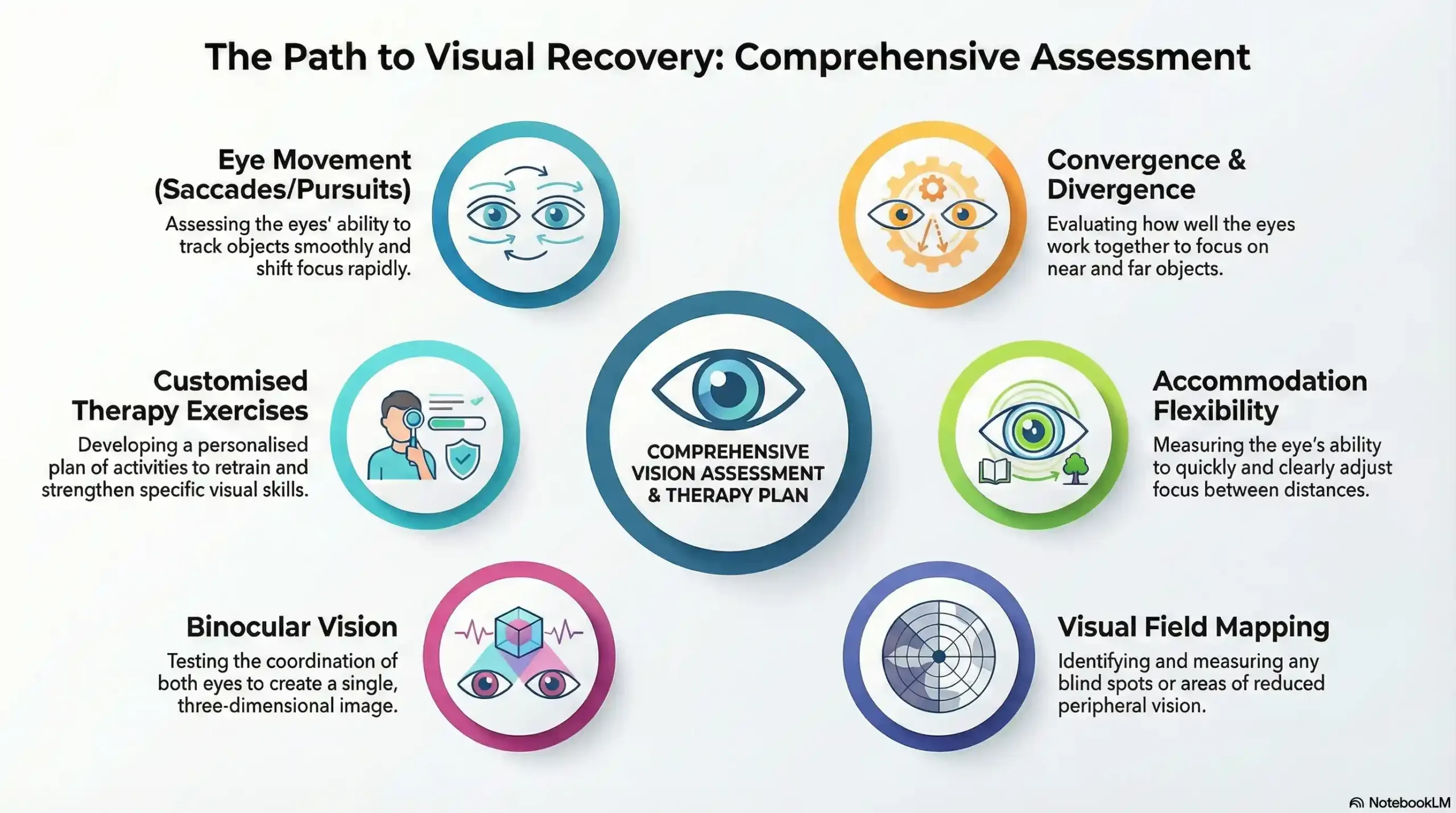
- Customized Vision Therapy Exercises
Fortunately, by using specific eye-training exercises, one can rewire the brain to improve eye function. Just as with other rehabilitation methods, the earlier one starts the eye exercises following a TBI, the better the chance of recovery and sight improvement.
- Specialized Optical Interventions
- Prism lenses for double vision relief
- Therapeutic tinted lenses for light sensitivity
- Progressive lens designs for focusing problems
- Yoked prism for spatial processing issues
The Multidisciplinary Advantage
It is important to note that a single type of vision rehabilitation treatment is often not enough to address all the patient’s needs. That is why an interdisciplinary, integrated team approach can play a vital role in the rehabilitation of patients with traumatic brain injuries.
Effective treatment often coordinates:
- Neuro-optometric rehabilitation
- Physical therapy for balance and coordination
- Occupational therapy for daily living skills
- Speech therapy for cognitive-communication challenges
- Neuropsychology for emotional adjustment
Real Patient Success Stories
Case Study: Return to Independence
Sarah, a 34-year-old teacher, struggled with reading and driving after a concussion from a car accident. Six months of vision therapy at our center helped her regain her ability to:
- Read for extended periods without fatigue
- Drive safely in various lighting conditions
- Maintain focus during classroom instruction
- Enjoy recreational activities she had abandoned
I cannot believe what Vision Therapy Academy has done for me! I suffered a Traumatic Brain Injury in 2011 and a concussion in April of 2023. I was having so much trouble with my vision, headaches, and balance. It was getting harder and harder for me to continue with my job.
Professional Athletes: Returning to Peak Performance
Joe went on to win the Wisconsin State Golf Association Match Play (super senior division) in July of 2022; in November of 2022, he shot a score of 63 on his home course (9 below par) and got his 9th hole in one.
Athletes face unique challenges, as even subtle visual deficits can significantly impact performance. Our specialized sports vision rehabilitation helps athletes regain:
- Dynamic visual tracking
- Hand-eye coordination
- Depth perception for ball sports
- Peripheral awareness
- Visual reaction time
What to Expect During Recovery
Timeline and Realistic Expectations
Recovery varies significantly based on:
- Severity and location of brain injury
- Time since injury occurred
- Individual neuroplasticity factors
- Consistency with therapy exercises
- Presence of other health conditions
Typical Recovery Phases:
Weeks 1-4: Foundation Building
- Initial comprehensive evaluation
- Beginning of basic eye movement exercises
- Symptom tracking and modification
- Education about the visual system recovery
Months 2-6: Skill Development
- Progressive increase in exercise complexity
- Integration of visual skills with daily tasks
- Reduction in symptoms during structured activities
- Improved tolerance for visual demands
Months 6-12: Functional Integration
- Advanced exercises mimicking real-world demands
- Return to work or school activities
- Driving assessment and training
- Sports or recreational activity resumption
Early Warning Signs to Watch For
Seek immediate evaluation if experiencing:
- Sudden onset of double vision
- Severe light sensitivity prevents daily activities
- Persistent headaches with visual tasks
- Balance problems when moving the eyes
- Inability to read or use computers
- Difficulty with depth perception or spatial awareness
The Cook Vision Therapy Approach
Why Specialized Expertise Matters
At Cook Vision Therapy Center, we understand that no two brain injuries are identical. Dr. David Cook’s four decades of experience have taught us that successful recovery requires:
Individualized Assessment Every patient receives a comprehensive evaluation addressing their unique symptom pattern and lifestyle demands.
Evidence-Based Treatment Protocols Our therapy programs incorporate the latest research in neuroplasticity and visual recovery.
Family-Centered Care We educate families about the recovery process and provide support throughout the journey.
Collaborative Medical Relationships We work closely with neurologists, physiatrists, and other medical specialists to ensure comprehensive care.
Advanced Treatment Technologies
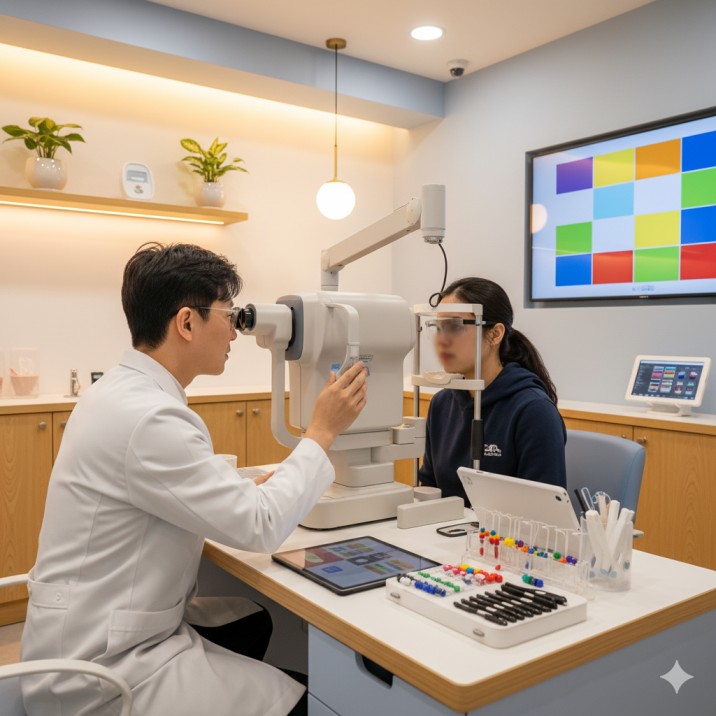
Our center utilizes cutting-edge equipment, including:
- Computerized eye tracking systems
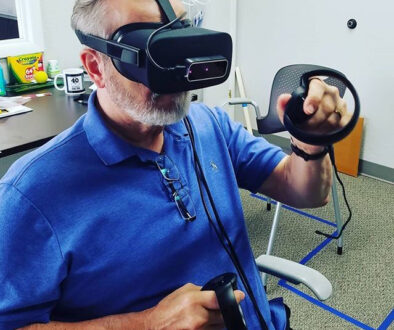
- Virtual reality training environments
- Binocular vision measurement tools
- Advanced prism fitting technologies
- Photosensitivity assessment instruments
Lifestyle Strategies for Daily Management
Optimizing Your Environment
Lighting Modifications
- Use natural lighting when possible
- Avoid fluorescent bulbs
- Install dimmer switches for gradual adjustment
- Consider tinted glasses for outdoor activities
Computer and Screen Use
- Follow the 20-20-20 rule: every 20 minutes, look at something 20 feet away for 20 seconds.
- Adjust screen brightness and contrast
- Use larger font sizes
- Position screens to minimize glare
Reading Adaptations
- Use bookmarks or reading guides
- Choose larger print materials
- Take frequent breaks
- Try audiobooks for extended content consumption
Driving Safety Considerations
Visual impairments also make driving very challenging after a head injury. This can be extremely dangerous for workers who need to drive heavy machinery, for example. It may be sensible to stop driving or have a driving assessment, even if you feel that your driving skills remain intact.
Before returning to driving:
- Complete a formal driving evaluation
- Practice in low-traffic areas
- Avoid night driving initially
- Limit freeway driving until skills improve
- Consider passenger assistance for complex routes
The Path Forward: Hope and Recovery
Building Your Support Team
Recovery from traumatic brain injury vision problems requires a comprehensive support network:
Medical Team
- Neuro-optometrist for specialized vision care
- Neurologist for ongoing brain injury management
- Primary care physician for overall health coordination
- Mental health counselor for emotional adjustment
Personal Support
- Family members educated about your condition
- Friends who understand your limitations
- Workplace accommodations and understanding
- Community resources for brain injury survivors
Maintaining Motivation Through Challenges
Recovery rarely follows a straight line. Expect periods of:
- Rapid improvement followed by plateaus
- Good days and challenging days
- Frustration with the pace of progress
- Celebration of small victories
Were it not for Dr. Wonderling and the dedicated professionals at Vision Therapy Academy, my life would not be the same today. I’m so grateful and lucky that I found them and began vision therapy so quickly after my injury! My best advice is this: if you have been diagnosed with a traumatic brain injury (TBI), do not delay; start your therapy as soon as possible for the best possible outcome.
Resources and Citations
Key Research Sources
1. Global Burden of Traumatic Brain Injury Study (2025) American Journal of Preventive Medicine
https://www.ajpmonline.org/article/S0749-3797(25)00001-7/abstract
This landmark 2025 study analyzed TBI burden in 204 countries from 1990 to 2021, providing the most current global statistics. The research found 20.84 million new TBI cases worldwide in 2021 and 37.93 million people living with TBI globally, representing a 22.6% increase since 1990. This comprehensive analysis utilized data from hospital records, emergency departments, national surveys, and claims data.
2. Vision Therapy Treatment Success for TBI Patients (2025) Optometry and Vision Science Journal
https://pubmed.ncbi.nlm.nih.gov/18156092/
Recent clinical research has demonstrated 90% treatment success rates for TBI patients who completed vision therapy programs for oculomotor dysfunctions. The study followed 33 patients with TBI through comprehensive vision therapy, with improvements remaining stable at 2-3 month follow-up testing. This research provides strong evidence for the effectiveness of neuro-optometric rehabilitation.
3. CDC National Health Interview Survey on TBI Prevalence (2025) Annals of Epidemiology https://www.sciencedirect.com/science/article/abs/pii/S1047279725000316
The most recent national survey data on TBI prevalence in the United States reveal that 3% of Americans (approximately 9.8 million people) reported experiencing a TBI in the past year. This large-scale, nationally representative study provides critical insights into the true burden of TBI, including cases that may not seek traditional medical care.
Additional Supporting Research
- Cognitive FX Treatment Outcomes: “Treating Traumatic Brain Injury Vision Problems: A Better Way” –
https://www.cognitivefxusa.com/blog/traumatic-brain-injury-vision-problems-symptoms-treatment - Neuro-Optometric Rehabilitation Association: “About Brain Injuries & Vision” –
https://noravisionrehab.org/patients-caregivers/about-brain-injuries-vision - Vision Research Program Military Statistics: “DOD TBI Worldwide Numbers” –
https://cdmrp.health.mil/vrp/default - University of Miami Vision Rehabilitation Research: “Vision rehab treatment effective for stroke and injury-related blindness” – https://www.sciencedaily.com/releases/2020/02/200224102021.htm
Conclusion: Your Journey to Visual Recovery
Traumatic brain injury doesn’t have to define your future. While the road to recovery may seem daunting, thousands of patients have successfully regained their visual function and returned to meaningful, productive lives.
The key is finding the right specialized care team that understands both the complexity of brain injury and the remarkable potential for recovery. Vision deficits are prevalent in this population, and treating them will significantly improve patient symptoms and help patients return to more independent lives as quickly as possible.
At Cook Vision Therapy Center, we’ve dedicated over four decades to perfecting the art and science of vision rehabilitation. Every success story reinforces our belief that with proper diagnosis, evidence-based treatment, and unwavering support, recovery is not just possible—it’s probable.
If you or a loved one is struggling with vision problems following a traumatic brain injury, don’t wait. Early intervention provides the best opportunity for optimal recovery. Contact our experienced team today to begin your journey back to a clear, comfortable, and confident vision.
Contact Cook Vision Therapy Center today to schedule your comprehensive evaluation and begin your journey to visual recovery.
Your recovery story is waiting to be written. Let us help you take the first step.
FAQs
-
TBI causes blurred vision, double vision, light sensitivity, reading difficulties, reduced peripheral vision, eyestrain, focusing problems, and visual tracking issues in up to 90% of patients.