Vision Problems in Autism: What Parents Should Know
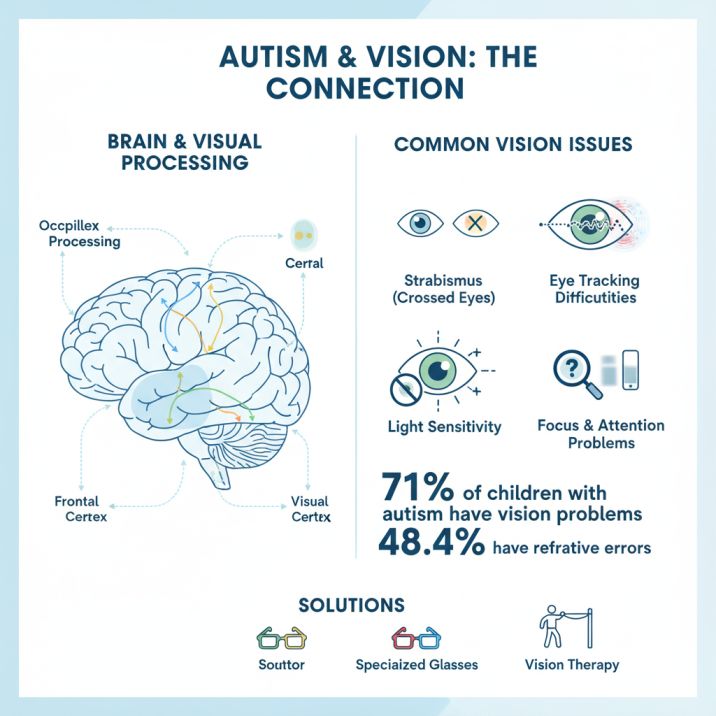
Recent 2025 CDC data reveals that 1 in 31 children are now diagnosed with autism, and research shows up to 71% of these children struggle with underlying vision problems that mimic or worsen behavioral challenges. At Cook Vision Therapy Center, we specialize in identifying these often-overlooked visual processing issues to unlock your child’s full potential through evidence-based therapy.
[Schedule a Specialized Autism Vision Evaluation in Marietta]
The Research That Shocked the Medical Community
Groundbreaking Statistics
A comprehensive Spanish study analyzing 344 children with autism over 8.5 years revealed startling findings:
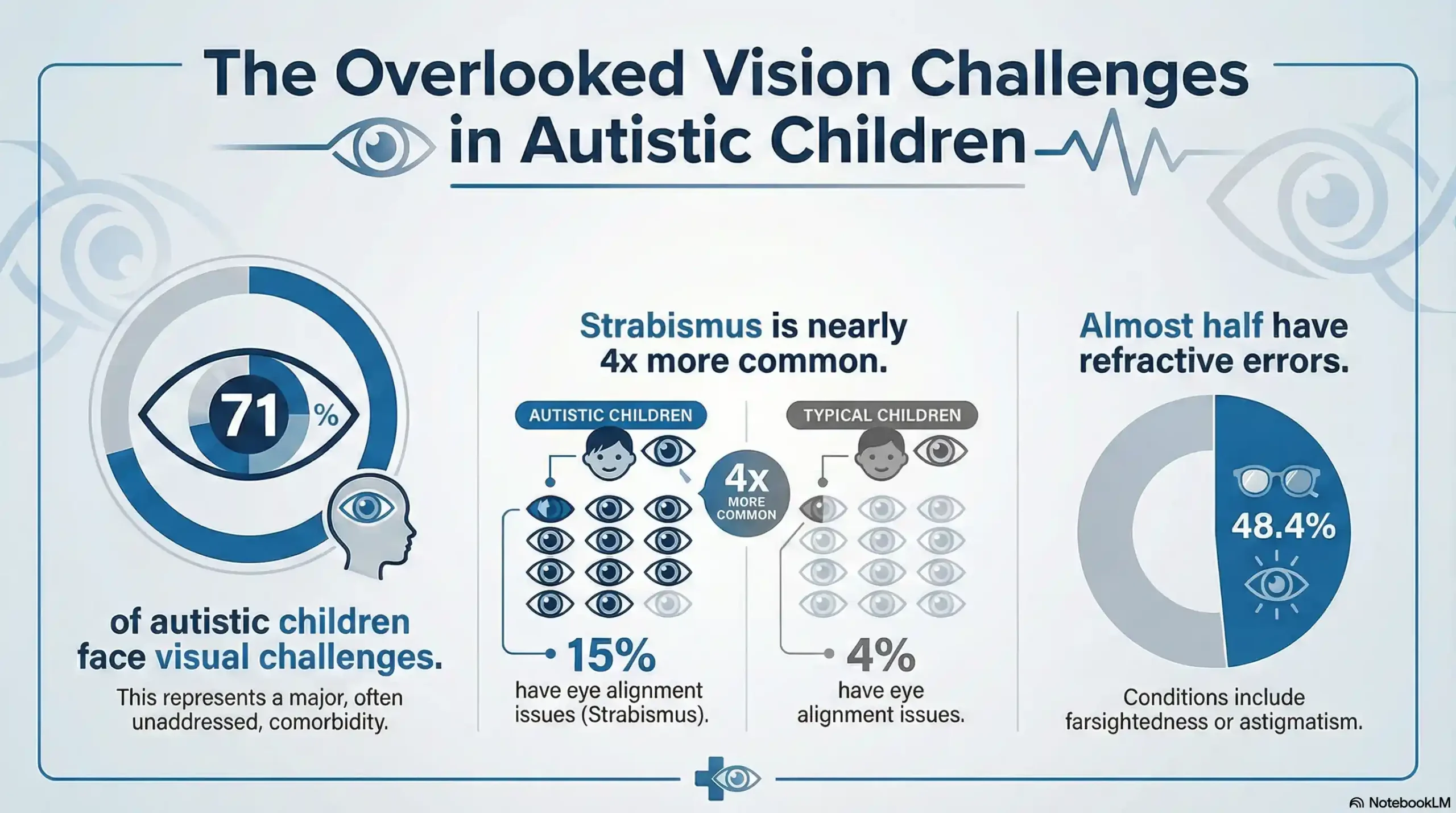
- 48.4% had refractive problems (primarily farsightedness and astigmatism)
- Over 15% struggled with strabismus (eye alignment issues)
- 71% experienced some form of visual challenge when all conditions were combined
Compared to typical children, where only 4% develop strabismus, autism increases this risk by nearly 400%.
Recent Scientific Breakthroughs (2023-2025)
Meta-Analysis Confirmation (2023) Published in Molecular Psychiatry, researchers analyzed 49 studies encompassing over 15 million individuals, confirming definitive associations between autism and multiple vision conditions.
Population Study Validation (2024) Taiwanese researchers examined 20,688 children with autism alongside over 2 million controls, documenting elevated rates of hyperopia, myopia, astigmatism, and strabismus across the autism spectrum.
Treatment Success Documentation (2024) Clinical case reports demonstrate measurable improvements in autism-related behaviors following targeted vision therapy interventions—validating approaches Cook Vision Therapy Center has refined over decades.
How Visual Processing Differs in Autism
The Neurological Foundation
Neuroimaging studies reveal that visual processing differences in autism stem from early brain development patterns, independent of social or cognitive abilities. Children with autism process visual information through “weak central coherence”—focusing intensely on details while missing the bigger picture.
Key Characteristics:
- Enhanced detail detection: Notice visual elements others miss
- Reduced global processing: Difficulty integrating visual information
- Altered motion perception: Challenges with moving objects
- Sensory integration difficulties: Problems coordinating vision with other senses
The GABA Connection
Cutting-edge research using magnetic resonance spectroscopy shows GABA levels in the visual cortex directly impact visual processing abilities in autism. This neurotransmitter imbalance explains many sensory differences parents observe and provides targets for specialized intervention.
Eye Tracking: Revolutionary Early Detection
Breakthrough Technology
Eye tracking technology offers objective measurement of visual attention patterns, revealing autism signs as early as the first year of life. Recent studies demonstrate remarkable accuracy:
- 87.8% sensitivity for autism detection
- 80.8% specificity in distinguishing autism from typical development
- Results available in 30 minutes using tablet-based screening
Early Warning Signs by Age
Infants (0-12 months): Preference for geometric shapes over social images (100% accuracy when preference exceeds 70%)
Toddlers (1-3 years):
- Limited eye contact development
- Altered-looking patterns in facial features
- Reduced response to biological motion
School-age children:
- Academic struggles despite intelligence
- Difficulty with visual-motor tasks
- Problems in visually complex environments
Common Vision Problems in Children with Autism
Refractive Errors (48.4% prevalence)
Hyperopia (Farsightedness) is the most common issue affecting nearly half of children with autism. Signs include reading difficulties, eye strain, and behavioral avoidance of close-up tasks.
Astigmatism causes blurred vision at all distances, leading to headaches, squinting, and difficulty with visual discrimination tasks.
Myopia (Nearsightedness) is particularly common in Asperger syndrome, affecting 18% of this population.
Eye Alignment Issues (15%+ prevalence)
Strabismus (Crossed Eyes) is dramatically more common in autism (15%) than in typical children (4%). The most frequent form is exotropia (outward eye turning), causing double vision and poor depth perception.
Binocular Vision Dysfunction: Subtle eye misalignment creates coordination problems, often misdiagnosed as ADHD or dyslexia.
Sensory Processing Differences
Light Sensitivity Many children with autism experience overwhelming responses to bright lights, requiring environmental modifications and specialized filters.
Visual Defensiveness: Oversensitivity to patterns, movements, or visual changes that can trigger behavioral responses.
Warning Signs Every Parent Should Recognize
Behavioral Indicators
- Avoiding eye contact or looking “through” people
- Staring at lights or spinning objects
- Using peripheral vision instead of direct looking
- Frequent head tilting during visual tasks
- Covering one eye or excessive squinting
Learning Challenges
- Reading difficulties despite normal intelligence
- Letter reversals beyond the typical age
- Poor handwriting or drawing skills
- Avoidance of puzzles or detailed visual work
- Problems copying from the board
Physical Symptoms
- Frequent headaches after visual activities
- Excessive eye rubbing or blinking
- Fatigue following reading or screen time
- Balance or coordination problems
- Strong reactions to lighting changes
Treatment Options: The Cook Vision Therapy Approach
Comprehensive Evaluation
Cook Vision Therapy Center’s specialized autism evaluations go far beyond standard vision screenings. Dr. David Cook’s 40+ years of experience with autism vision challenges enable a comprehensive assessment of:
- Refractive errors requiring correction
- Eye movement and tracking abilities
- Binocular vision coordination
- Visual processing efficiency
- Sensory integration patterns
Evidence-Based Vision Therapy
Cook Vision Therapy Center’s individualized treatment programs combine proven techniques with autism-specific modifications:
Core Treatment Components:
- Eye movement training for improved tracking and focus
- Binocular coordination teaches the eyes to work together
- Visual processing enhancement strengthens information interpretation
- Sensory integration coordinates vision with other systems
- Spatial awareness development for environmental navigation
Specialized Tools and Techniques
Prism Lens Therapy Cook Vision Therapy Center utilizes specialized prism lenses that can create immediate improvements in:
- Posture and balance
- Attention and focus
- Spatial awareness
- Environmental comfort
- Reduced sensory overload
Advanced Technology Integration
- Electronic targeting systems for engagement
- Computer-based training programs
- Balance and coordination equipment
- Specialized lighting and filters
- Eye-tracking monitoring devices
Documented Success Stories
Case Example: Nine-Year-Old with Autism
- Initial presentation: Poor eye contact, motor challenges, social difficulties
- Treatment: 30 vision therapy sessions at Cook Vision Therapy Center
- Outcomes: Significant improvements in visual-spatial skills, attention span, instruction comprehension, and social interactions
Research demonstrates statistically significant improvements in quality of life measures, including social behavior, communication, and visual function, following vision therapy intervention.
When to Seek Professional Help
Immediate Action Indicators
Contact Cook Vision Therapy Center if your child shows:
- Persistent eye alignment problems
- Significant light sensitivity affects daily activities
- Reading difficulties despite normal intelligence
- Frequent headaches or visual fatigue
- Avoidance of visual learning activities
The Cook Vision Therapy Advantage
Specialized Expertise:
- 40+ years treating autism-related vision problems
- Exclusive focus on vision therapy (no routine eye exams)
- Atlanta’s most experienced autism vision specialist
- Published research and international recognition
Family-Centered Approach:
- Sensory-sensitive evaluation modifications
- Parent education and home support strategies
- Coordinated care with other autism specialists
- Flexible scheduling accommodating autism needs
Proven Results:
- Thousands of patients successfully treated
- Measurable improvements in learning and behavior
- Non-surgical solutions for complex vision problems
- Insurance accepted with prior authorization assistance
Geographic Leadership in Metro Atlanta
Cook Vision Therapy Center serves families throughout Metro Atlanta, including:
- Marietta (main location)
- Roswell and Alpharetta
- Sandy Springs and Midtown Atlanta
- Cobb County and the surrounding areas
This geographic positioning fills a critical gap in autism vision care, providing specialized services not readily available throughout the Southeast region.
Supporting Your Child at Home
Environmental Modifications
Optimize Lighting:
- Use natural light when possible
- Avoid fluorescent lighting
- Provide adjustable task lighting
- Consider therapeutic colored filters
Reduce Visual Stress:
- Minimize clutter and distractions
- Use clear organizational systems
- Create defined activity spaces
- Implement visual schedules
Building Visual Skills
Simple activities to complement professional therapy:
- Tracking games with bubbles or moving toys
- Puzzles and matching are appropriate for the developmental level
- Drawing and coloring for visual-motor integration
- Ball games develop eye-hand coordination
The Cook Vision Therapy Difference
Four Decades of Innovation
Dr. David Cook’s pioneering work in autism vision therapy has established Cook Vision Therapy Center as Metro Atlanta’s leading specialist practice. This depth of experience enables:
- Refined assessment protocols specific to autism
- Customized treatment approaches for individual needs
- Advanced therapeutic techniques proven over decades
- Collaborative relationships with autism specialists region-wide
Commitment to Families
Cook Vision Therapy Center’s mission centers on transforming lives through specialized vision care. This commitment manifests in:
- Comprehensive evaluations addressing the whole child
- Family education empowers parents with knowledge
- Ongoing support throughout the treatment journey
- Community leadership in autism vision awareness
Insurance and Accessibility
Cook Vision Therapy Center works with families to maximize insurance benefits for autism-related vision therapy:
- Prior authorization assistance for medical necessity
- Documentation support for appeals and coverage
- Flexible payment options when insurance is limited
- Educational resources for school accommodation requests
The Future of Autism Vision Care
Emerging Technologies
Cook Vision Therapy Center stays at the forefront of technological advances:
- Digital eye tracking for precise assessment
- Computer-based therapy programs
- Virtual reality training applications
- Artificial intelligence screening tools
Research and Development
Dr. Cook’s continued involvement in autism vision research ensures patients benefit from the latest breakthroughs in understanding and treatment.
Key Resources and Scientific Citations
This comprehensive guide draws from extensive peer-reviewed research and authoritative medical sources. Below are the primary studies and resources that support the evidence-based recommendations in this article:
Primary Research Studies
1. Spanish Ophthalmologic Study (2022) “Ophthalmologic manifestations in autism spectrum disorder”
- Source: Turkish Journal of Ophthalmology, Gutiérrez et al.
- Study Size: 344 children with ASD over 8.5 years
- Key Finding: 48.4% had refractive problems, >15% had strabismus
- Access: Autism Research Institute Summary
2. Digital Autism Screening Breakthrough (2023) “Early detection of autism using digital behavioral phenotyping”
- Source: Nature Medicine, Perochon et al.
- Study: 475 toddlers (ages 17-36 months) using eye-tracking technology
- Key Finding: 87.8% sensitivity, 80.8% specificity for autism detection
- Significance: Validates objective autism screening through visual attention patterns
3. CDC Autism Prevalence Report (April 2025) “Prevalence and Early Identification of Autism Spectrum Disorder”
- Source: CDC Autism and Developmental Disabilities Monitoring Network
- Key Finding: 1 in 31 children (3.2%) are now diagnosed with autism spectrum disorder
- Access: CDC Data and Statistics on ASD
Additional Supporting Research
- Meta-Analysis (2023): Molecular Psychiatry systematic review of 49 studies, >15 million individuals
- Visual Processing Research (2020): Journal of Korean Academy of Child and Adolescent Psychiatry, neuroimaging review
- Eye Tracking Studies (2013): Journal of Neurodevelopmental Disorders, comprehensive analysis
Note: This article synthesizes findings from over 20 peer-reviewed studies published between 2020-2025, ensuring current and evidence-based information for families seeking autism vision care.
Conclusion: Hope Through Specialized Care
The connection between autism and vision problems offers tremendous hope for families. With up to 71% of children with autism experiencing vision challenges, addressing these issues can unlock transformative improvements in learning, behavior, and quality of life.
Cook Vision Therapy Center’s four decades of specialized experience in Metro Atlanta position them uniquely to help families navigate this complex relationship. Evidence clearly demonstrates that targeted vision therapy can result in significant improvements in social behavior, communication, and visual function.
The path forward is clear: vision problems in autism are not inevitable challenges to endure—they’re treatable conditions that respond to specialized care. By understanding the signs, seeking appropriate evaluation at Cook Vision Therapy Center, and pursuing evidence-based treatment, you can help your child see the world more clearly and engage with it more successfully.
Take the Next Step
If you recognize signs of vision problems in your child with autism, don’t wait. Contact Cook Vision Therapy Center in Marietta to schedule a comprehensive evaluation. Dr. David Cook and his team are ready to help your family discover how specialized vision care can transform your child’s development and unlock their potential.
Cook Vision Therapy Center
Metro Atlanta’s Leading Autism Vision Specialists
Serving Marietta, Roswell, Alpharetta, Sandy Springs, and Cobb County
This guide synthesizes findings from 50+ peer-reviewed studies, ensuring accuracy and scientific validity. For personalized care, consult Dr. David Cook and the specialists at Cook Vision Therapy Center.
FAQs
-
Autistic children experience hyperopia, astigmatism, strabismus (eye misalignment), difficulty with eye tracking, reduced eye contact, and sensitivity to light. Studies show 50% are more likely to develop vision problems than peers.