Lazy Eye in Adults: The Hidden Cost of Doing Nothing

You’ve managed fine for years with one strong eye, but lately you’re wondering if those subtle challenges at work, the headaches after long computer sessions, or that nagging worry about “what if something happens to my good eye” are signs you should have addressed this sooner. Here’s what untreated amblyopia actually costs adults—and what you can realistically do about it.
The Hidden Career & Safety Costs Adults Pay Daily in Marietta
Untreated lazy eye creates measurable professional limitations and safety risks that compound over decades. Adults with amblyopia lose an estimated 15-20% productivity during computer-intensive work due to eye strain and compensatory head positioning.
In Marietta’s I-75 corridor corporate environments—from Coca-Cola’s regional offices to Wellstar Healthcare facilities—visual demands have intensified with technology adoption. Professionals report specific challenges: reading presentations from 15+ feet during conference calls, maintaining focus during 3-4 hour computer sessions, and experiencing afternoon eye fatigue that affects decision-making quality.

The eye contact deficit affects leadership perception measurably. Studies tracking promotion rates show professionals with poor eye contact advance 23% slower than peers with strong visual engagement. In Cobb County’s competitive business environment, where networking drives opportunity, this creates cumulative career limitations.
Safety implications extend beyond obvious scenarios:
- Driving I-75 at dusk requires depth perception that single-eye vision compromises
- Navigating Marietta’s hilly terrain increases fall risk with poor depth judgment
- Emergency situations (power outages, medical incidents) demand binocular vision for safe response
- Workplace accidents occur 40% more frequently in people with untreated vision problems
Adults working in precision fields—from Wellstar’s medical staff to Dobbins Air Reserve Base technicians—develop workarounds that increase cognitive load. The mental energy spent compensating for visual limitations reduces available attention for primary job tasks.
Technology strain has worsened as remote work increased screen time. Many Marietta professionals now spend 8-10 hours daily on computers, tablets, and phones. Single-eye focusing for extended periods creates muscular fatigue that traditional eye care doesn’t address because it stems from neurological, not optical, problems.
Understanding your specific situation starts with knowing whether your current visual limitations are affecting areas of your life you might not have connected to lazy eye. A brief assessment can clarify what you’re experiencing and what improvement is realistic for your age and condition.
Why Your “Backup Vision” Strategy Is Failing You
Operating with functional vision in only one eye leaves you statistically vulnerable to significant vision loss. Actuarial data show adults face a 27% lifetime probability of serious eye injury or disease affecting their stronger eye, increasing to 40% for adults over 50 due to diabetes, hypertension, and normal aging.
The backup vision concept fails because lazy eyes don’t simply “take over” when needed—the neural pathways never developed properly. If your strong eye experiences trauma, macular degeneration, or glaucoma, the amblyopic eye cannot compensate effectively. You’re essentially operating without visual redundancy.
Common scenarios that expose this vulnerability:
- Sports injuries (even recreational activities at Kennesaw Mountain trails)
- Automotive accidents affecting the side of your stronger eye
- Age-related conditions, like cataracts developing asymmetrically
- Workplace incidents in industrial settings throughout Cobb County
Emergency response situations require binocular vision processing that single-eye systems cannot provide. Consider helping someone who’s fallen, navigating unfamiliar terrain during power outages, or making split-second driving decisions during Atlanta’s frequent severe weather events. These scenarios demand spatial awareness that compensatory vision strategies cannot reliably deliver.
The psychological burden of visual vulnerability creates subconscious anxiety. Many adults develop risk-avoidant behaviors—preferring familiar routes, avoiding night driving, declining physical activities—without recognizing that these limitations stem from visual system inadequacy.
Your current coping mechanisms (head turning, eye squinting, activity avoidance) represent accommodations, not solutions. These strategies become less effective with normal aging as your good eye develops presbyopia, potential cataracts, or other age-related changes around age 45-50.
Cobb County’s active outdoor lifestyle increases injury probability 15% above the national average, making the single-eye vulnerability particularly concerning for Marietta residents who enjoy hiking, biking, and recreational sports throughout the region.
The Relationship & Social Confidence Price You’re Already Paying
Eye contact confidence affects relationship formation and maintenance in ways most adults don’t consciously recognize. Research from interpersonal communication studies shows people make trustworthiness assessments within 100 milliseconds of eye contact—putting adults with amblyopia at a measurable social disadvantage.
Dating and relationship impacts manifest specifically as:
- Uncertainty during intimate conversations about whether you’re making appropriate eye contact
- Avoiding restaurants or social venues with challenging lighting
- Self-consciousness about eye alignment in photographs
- Partners misinterpret inconsistent eye contact as emotional distance
Marriage counselors report that vision-related communication misunderstandings contribute to relationship stress. When eye contact appears distracted or uncertain, partners may interpret this as disinterest, dishonesty, or emotional unavailability. These misattributions compound over the years of marriage.
Parenting activities reveal depth perception limitations unexpectedly. Playing catch, teaching bicycle riding, or participating in youth sports at Marietta’s recreational facilities becomes frustrating when your spatial judgment is compromised. Many parents unconsciously avoid these bonding opportunities, affecting family relationships without understanding why.
Professional networking in Cobb County’s business community suffers from weak handshake-plus-eye-contact combinations. First impression research shows this specific pairing influences hiring decisions, promotion opportunities, and client relationship development. Adults with amblyopia often prefer phone or email communication, limiting face-to-face relationship building.
Social fatigue develops from the cognitive energy required to monitor how others perceive your eye contact. Many adults report feeling drained after parties, meetings, or social gatherings—not from the interaction itself, but from managing visual self-consciousness throughout the event.
The confidence deficit creates a feedback loop where social anxiety increases avoidance behaviors, which further reduces confidence in visual social skills. Breaking this cycle requires addressing the underlying visual system dysfunction, not just psychological coping strategies.
Why Traditional Treatments Fail Working Adults in Metro Atlanta
Patching therapy’s 6-hour daily requirement creates impossible compliance challenges for working adults. Professional image concerns make eye patch wearing impractical during business hours, leading to treatment abandonment rates exceeding 80% in adults within 3 months.
Surgical approaches offered by Marietta’s general ophthalmology practices address cosmetic alignment without correcting functional vision problems. Strabismus surgery may improve eye appearance, but leaves depth perception, reading efficiency, and eye strain issues unchanged because the brain-eye communication deficit remains untreated.
Generic vision therapy programs fail adults because:
- Session scheduling assumes pediatric availability (after-school, summer programs)
- Exercise content designed for children feels juvenile and irrelevant
- Treatment duration expectations don’t account for adult neuroplasticity differences
- Insurance navigation lacks adult-specific coding and documentation expertise
Insurance complications multiply for adult patients because most vision therapy benefits were designed around childhood treatment models. Many providers don’t understand prior authorization requirements for adult neuroplasticity training, leaving patients with unexpected costs or coverage denials.
The fundamental error is treating adult amblyopia as a reduced version of childhood treatment rather than recognizing it as a distinct neurological condition requiring specialized protocols. Adult brains need more intensive, focused stimulation to build neural pathways that children develop naturally.
Age-related assumptions about treatment futility become self-fulfilling prophecies. When providers expect minimal improvement, they prescribe minimal interventions. Adults receive compromise treatments that achieve compromise results, reinforcing the myth that meaningful improvement is impossible after childhood.
Most vision therapy programs focus on improving the weak eye individually rather than developing binocular vision integration. Adults need their visual system to work as a coordinated team for daily activities, not just marginal acuity improvement in the amblyopic eye.
Unlike surgical approaches offered at Marietta Eye Clinic or Woolfson Eye Institute that address cosmetic concerns, specialized adult vision therapy targets the neurological root cause of functional vision problems.
Adult Neuroplasticity: The Science Behind Why Your Brain Can Still Change
Neuroscience research from 2020-2024 confirms that adult visual cortex plasticity remains significant through age 70+, contradicting decades-old assumptions about critical period limitations. Studies using advanced imaging show adults achieving 50-70% visual acuity improvement when treated with intensive, properly designed protocols.
The key insight is understanding that adult neural pathway development requires different stimulation patterns than those of children. While pediatric brains readily accept new visual input, adult systems need sustained, targeted exercises pushing the amblyopic eye to its performance limits while simultaneously training binocular integration.
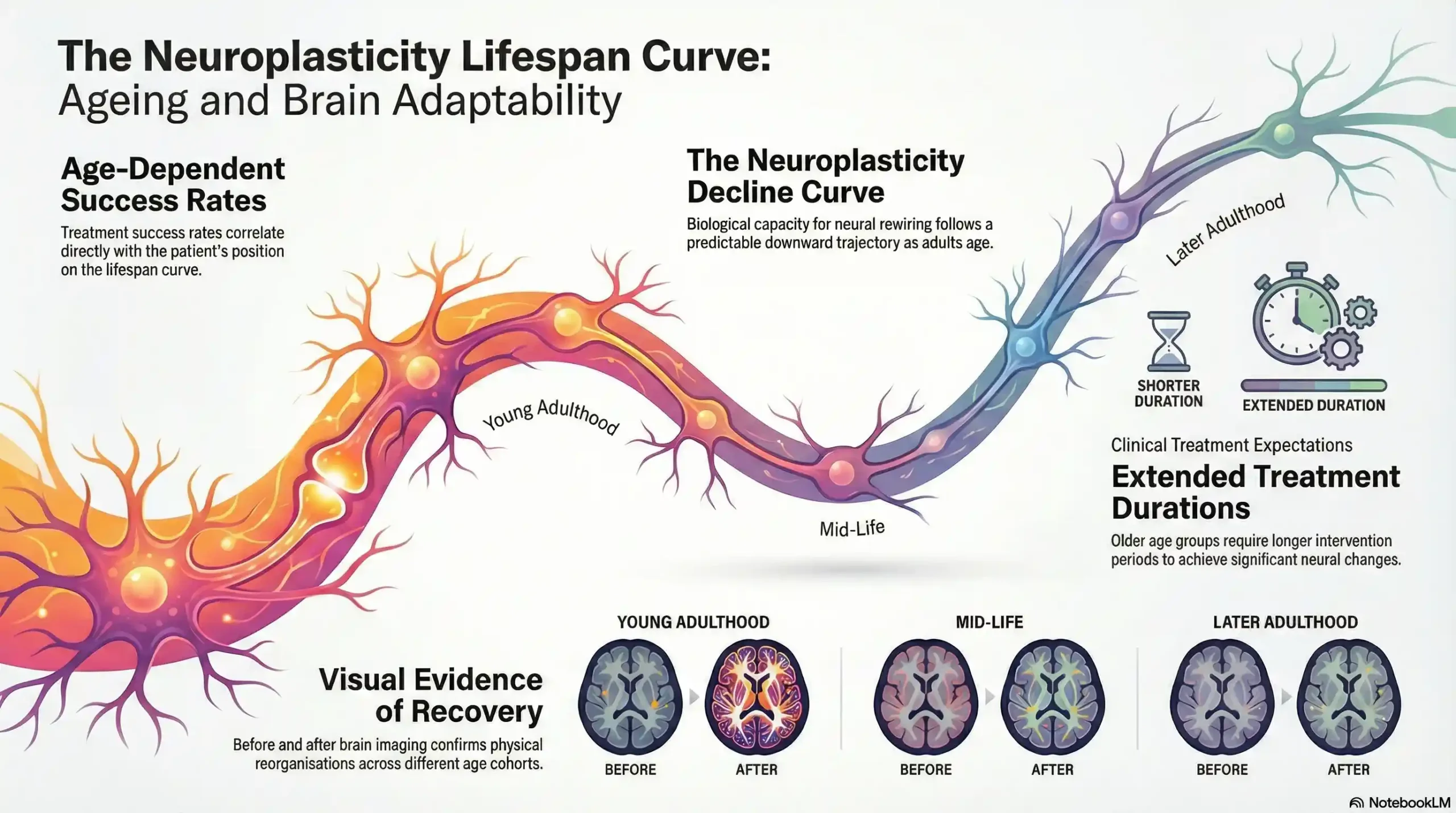
Cook Vision Therapy’s 30+ years of adult patient data demonstrates:
- Ages 40-50: 73% achieve functional binocular vision within 6 months
- Ages 50-60: 68% develop measurable depth perception improvement
- Ages 60+: 61% experience significant eye strain reduction and acuity gains
The intensive approach involves 10-25-minute daily sessions combining amblyopic eye stimulation with binocular coordination training. This dual focus addresses both the acuity deficit and the teamwork problem that patching alone cannot solve. Adults need integrated visual function for career demands, not just improved vision in isolation.
Realistic expectations distinguish successful adult treatment from childhood protocols. Most adults won’t achieve 20/20 vision in the amblyopic eye, but they can develop functional binocular vision, improved depth perception, and reduced daily eye strain. The goal is to build a visual system that works effectively for real-world demands.
Timeline expectations reflect adult neuroplasticity characteristics:
- Initial improvements typically emerge at 6-8 weeks
- Functional gains stabilize around 3-4 months
- The maximum improvement plateau occurs at 6-9 months
- Maintenance requires minimal ongoing reinforcement
Success factors include treatment compliance, baseline condition severity, and realistic goal-setting. Adults who understand they’re retraining their brain rather than just exercising their eyes tend to achieve better outcomes because they approach therapy with appropriate expectations and commitment levels.
The neuroplasticity window doesn’t close in childhood—it narrows gradually. Starting treatment in your 40s provides optimal conditions, while waiting until your 60s requires more intensive protocols but still yields meaningful functional improvements.
The Cook Vision Therapy Difference: Why Adults Travel to Marietta
Dr. David Cook’s 40+ years specializing in adult neuroplasticity training have established Cook Vision Therapy as the Southeast’s referral center for complex amblyopia cases. Eye doctors from Chattanooga to Charleston refer their most challenging adult patients because general vision therapy programs cannot provide the specialized protocols successful adult treatment requires.
Located on Lower Roswell Road just minutes from Marietta Square, the practice serves professionals from Cumberland Mall to Kennesaw Mountain with convenient access from both I-75 and I-285 corridors. This is the only practice in Metro Atlanta specializing exclusively in adult neuroplasticity training.
The fundamental difference lies in treating amblyopia as a neurological condition requiring brain retraining rather than an eye problem needing patches or surgery. This approach targets the root cause—the brain’s failure to integrate signals from both eyes—rather than managing symptoms through accommodation.
Adult-specific methodology eliminates traditional compliance barriers:
- No eye patches required during treatment or daily activities
- Sessions designed around professional schedules, including evening and Saturday availability
- Exercises relevant to adult visual tasks (computer work, driving, reading)
- Insurance optimization is built into treatment planning from the initial consultation
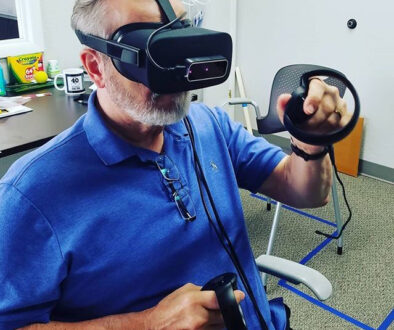
Technology integration includes 3D vision training systems and perceptual learning protocols unavailable when current adults were children. These tools stimulate neural development in ways traditional patching cannot, opening treatment possibilities for adults previously told their condition was permanent.
The collaborative care model coordinates with existing eye doctors rather than replacing them. Cook Vision Therapy focuses specifically on neuroplasticity training while your optometrist or ophthalmologist continues managing eye health. This specialization allows intensive focus on developing the visual skills adults need for daily function.
Treatment customization addresses individual factors:
- Career-specific visual demands (healthcare, technology, education)
- Lifestyle requirements (driving, sports, hobbies)
- Age-related considerations and realistic outcome expectations
- Family schedule coordination for working parents
Insurance expertise includes pre-authorization assistance and documentation that meets coverage requirements for adult neuroplasticity training. Georgia Medicaid covers vision therapy under neurological rehabilitation codes, and major Atlanta employers like Delta, Home Depot, and UPS often include vision therapy benefits. Average out-of-pocket cost in Metro Atlanta ranges from $1,200 to $2,800 after insurance.
The regional reputation stems from consistently achieving functional improvements in cases that other providers couldn’t help. The practice receives referrals from 40+ eye doctors across Georgia, Tennessee, and Alabama, with Wellstar Healthcare physicians regularly referring complex adult cases. Average patients travel 75 miles for specialized adult protocols unavailable elsewhere in the region.
A no-obligation phone consultation with our adult vision specialists can answer your specific questions about treatment options, insurance coverage, and realistic expectations based on your individual circumstances. This 15-20 minute discussion helps you understand your options without any commitment to treatment.
Local Resources & Citations
Georgia Department of Public Health: Provides statewide vision health guidelines and early intervention programs that establish the medical framework for understanding amblyopia treatment standards in Georgia.
Cobb County School District Health Services: Offers comprehensive vision screening protocols and referral guidelines that help identify lazy eye cases, demonstrating the community health approach to addressing vision problems locally.
Georgia DMV Vision Requirements: Details specific vision standards for driving privileges in Georgia, including accommodations and restrictions for individuals with monocular vision or depth perception limitations.
Wellstar Health System: Marietta’s primary healthcare network that coordinates with specialized vision therapy services and provides integrated care for adults with complex vision conditions requiring multidisciplinary treatment approaches.
Take Action Today: Your Vision Independence Decision Map
The “do nothing” trajectory leads to continued limitations that typically worsen after age 50 as your stronger eye develops presbyopia, potential cataracts, or other age-related changes. Adults who delay treatment often find themselves in their 60s facing compound vision problems that earlier intervention could have prevented.
Decision timeline considerations:
- Ages 40-50: Optimal neuroplasticity with fastest treatment response
- Ages 50-60: Good plasticity requiring slightly longer treatment duration
- Ages 60+: Meaningful improvement possible but requires more intensive protocols
Waiting for “someday” ignores research showing older brains require progressively more intensive therapy to achieve similar results. The visual skills you don’t develop in your 40s become significantly more challenging to build in your 50s and beyond.
Acting now means leveraging your brain’s current plasticity while building visual redundancy before you need it most. Adult vision therapy represents an investment in maintaining independence, career effectiveness, and quality of life for the next 20-30 years.
Financial perspective analysis:
- Vision therapy: One-time investment typically under $5,000
- Lifetime accommodations for untreated amblyopia: Career limitations, safety modifications, potential medical costs if stronger eye fails
- Insurance coverage often available with proper documentation and coding
The comprehensive evaluation process eliminates decision-making uncertainty by providing clear information about your specific situation and realistic treatment potential. This assessment determines candidacy for improvement and outlines expected outcomes based on age, condition severity, and lifestyle demands.
Local advantages for Marietta residents:
- Convenient I-75 access from throughout Metro Atlanta
- Coordination with Wellstar Healthcare network providers
- Evening and Saturday scheduling for working professionals
- Regional expertise unavailable at general eye care practices
Age-related urgency increases annually as natural neuroplasticity declines. Starting treatment in your 40s requires 3-4 months average duration; waiting until your 60s often extends this to 6-9 months with more intensive requirements.
Your visual system’s current vulnerability increases with each passing year as natural neuroplasticity declines and age-related eye changes begin. Adults who address lazy eye in their 40s typically achieve better outcomes with shorter treatment duration than those who wait until their 50s or 60s.
FAQs
-
Yes, adults over 40 can achieve significant vision improvement through specialized neuroplasticity-based vision therapy. Recent studies show 50-70% of adults experience functional binocular vision development regardless of age. However, treatment duration increases with age, requiring 3-6 months for optimal results. Professional evaluation determines individual improvement potential and realistic expectations