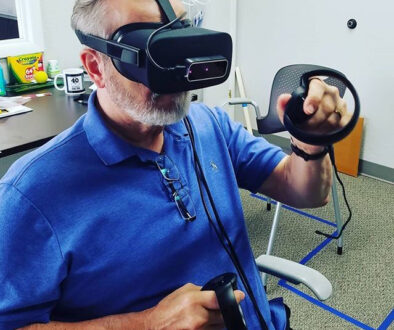
Vision Therapy vs Surgery for Crossed Eyes GA
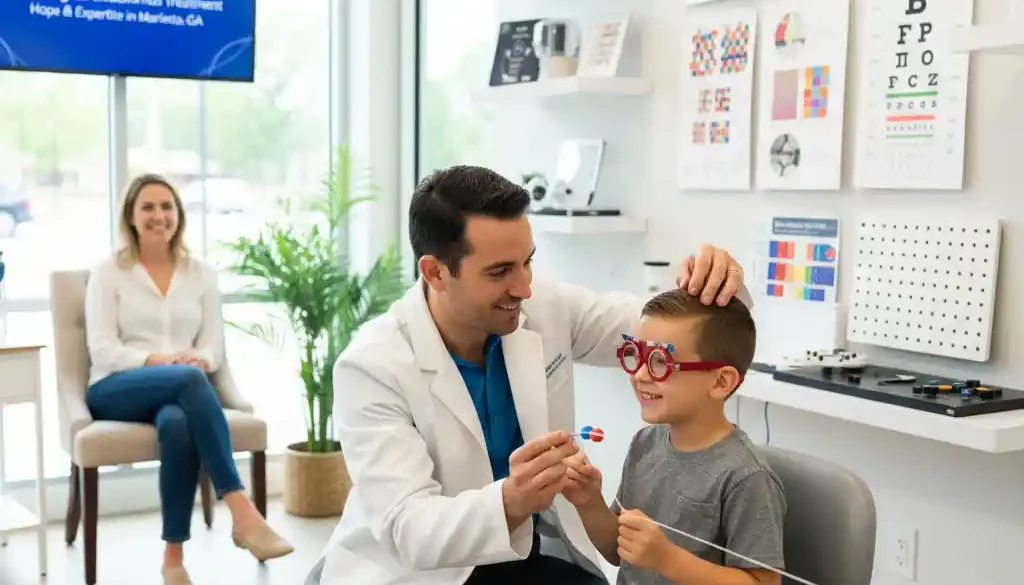
Strabismus surgery physically repositions the eye muscles to improve cosmetic alignment but does not retrain the brain-eye connection, which means misalignment can recur. Vision therapy, by contrast, is a non-surgical, clinician-supervised program that retrains the neurological systems controlling how the eyes work together — addressing the root cause of strabismus and improving functional outcomes including depth perception and 3D vision. For many patients in Marietta, GA and across Metro Atlanta, vision therapy offers a proven alternative — or a powerful complement — to surgery.
If you or your child has been diagnosed with strabismus — commonly known as crossed eyes or wandering eye — there is a strong chance the first recommendation you received was surgery. For many families and adults across Cobb County and Metro Atlanta, that conversation can feel overwhelming, final, and frightening. The good news is that surgery is not always the only path forward.
At Cook Vision Therapy Center, Inc., located at 1395 South Marietta Pkwy SE, Bldg 400, Ste 107, Marietta, GA 30067, we believe every patient deserves to make a fully informed decision before committing to any procedure. This guide is designed to give you the clear, honest, expert perspective you need — so you can move forward with confidence.
What Is Strabismus? Understanding Crossed Eyes Beyond the Surface
Strabismus is a condition in which the eyes are not properly aligned with each other. One or both eyes may turn inward, outward, upward, or downward — either constantly or intermittently. While many people associate strabismus with young children, this condition affects people of all ages, including working adults and seniors across the greater Atlanta region.
It is important to understand that strabismus is not simply a cosmetic issue. At its core, it reflects a breakdown in the neurological communication system between the eyes and the brain. When the two eyes fail to work together as a coordinated team — a condition clinicians refer to as binocular vision dysfunction — the brain may suppress the image from one eye entirely, leading to a cascade of functional challenges that extend far beyond appearance.
Many patients and families also confuse strabismus with amblyopia, commonly called lazy eye. While the two conditions can coexist, they are distinct. Amblyopia refers to reduced visual acuity in one eye due to the brain favoring the other, while strabismus specifically describes the misalignment of the eyes themselves. Both conditions are within the scope of care at Cook Vision Therapy Center.
For families in Marietta, Kennesaw, Roswell, and Smyrna, understanding this neurological dimension of strabismus is the critical first step — because it determines which treatment path is truly appropriate for each patient.
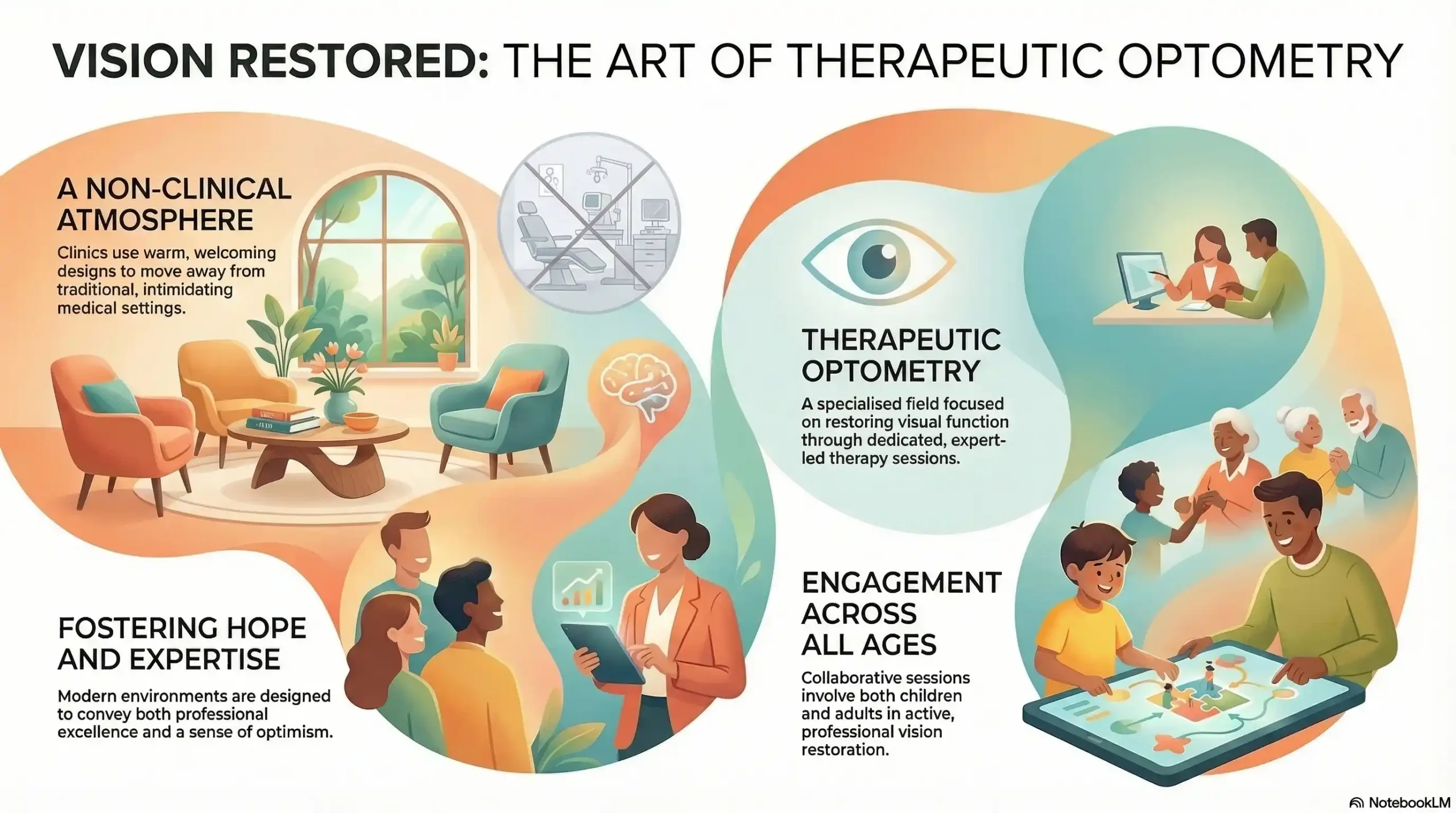
The Traditional Answer: What Strabismus Surgery Involves
Strabismus surgery is a procedure performed by an ophthalmologist in which the muscles attached to the outside of the eye are repositioned — either strengthened or weakened — to change the eye’s resting alignment. The surgery is typically performed under general anesthesia and is considered an outpatient procedure, meaning patients return home the same day.
Recovery generally involves redness, soreness, and temporary double vision for days to several weeks following the procedure. Most patients are advised to limit physical activity during the initial recovery period.
What Are the Risks of Strabismus Surgery?
It is important to approach this topic with balance and transparency. Strabismus surgery is a legitimate medical procedure performed by skilled specialists, and it carries a meaningful role in specific clinical scenarios. However, patients deserve a full understanding of its limitations before deciding.
One of the most significant concerns is recurrence. Research consistently shows that strabismus can return following surgery, particularly when the underlying neurological cause — the failure of the brain to coordinate the two eyes — has not been addressed. Some patients require two, three, or even more surgical procedures over the course of their lives. Additionally, while surgery can improve the cosmetic appearance of eye alignment, it does not automatically restore binocular vision, depth perception, or 3D vision. Patients may find that their eyes look straighter but still do not function as a true coordinated team.
Other considerations include the risks inherent to any surgical procedure — reactions to anesthesia, infection, and overcorrection or undercorrection of alignment — all of which are important to discuss candidly with any treating physician.
When Surgery May Be the Appropriate Choice
In the spirit of honest, patient-centered guidance, it is worth acknowledging that strabismus surgery can be the appropriate choice in specific circumstances — particularly in cases involving severe structural muscle abnormalities, large-angle deviations that have not responded to non-surgical intervention, or situations where surgery and vision therapy are recommended together as a combined treatment plan. The goal of this article is not to discourage surgery categorically, but to ensure that patients in Marietta, GA and across the Southeast understand that it is not always the only option.
The Vision Therapy Alternative: A Non-Surgical Path to Straight Eyes
Vision therapy is a clinician-supervised, individualized program of therapeutic activities and exercises designed to improve the way the visual system — specifically the eyes and the brain — work together. It is not a simple set of eye exercises you perform at home. It is a structured, evidence-based program delivered in a clinical setting using specialized equipment, tailored to each patient’s unique visual profile.
The foundational principle of vision therapy is this: strabismus is a neurological problem, and neurological problems require neurological solutions. By retraining the brain’s ability to coordinate both eyes simultaneously, vision therapy works to resolve the root cause of misalignment — rather than addressing only its outward appearance.
How Vision Therapy Treats Strabismus at the Root Cause
Through a carefully sequenced series of in-office sessions and guided at-home activities, vision therapy helps the brain and eyes establish new, healthy patterns of coordination. This process — sometimes described as neuro-optometric rehabilitation — works by gradually building the patient’s ability to achieve and sustain accurate binocular alignment at various distances and in various visual environments.
The outcomes our patients work toward include not only straighter eyes, but genuine improvements in 3D vision, depth perception, eye-body coordination, and the ability to maintain comfortable, sustained focus during reading, computer work, and daily activities. These are functional gains that surgery alone cannot reliably deliver.
Vision Therapy for Adults with Strabismus — It’s Not Just for Kids
One of the most persistent and damaging myths surrounding vision therapy is that it is only effective for young children. This is not supported by clinical evidence or by the outcomes we observe every day at Cook Vision Therapy Center.
The brain retains a meaningful degree of neuroplasticity — the ability to form new connections and learn new patterns — well into adulthood. Adult patients with long-standing strabismus, including those who have been told for decades that nothing can be done, have achieved life-changing results through a committed vision therapy program. Whether you are a professional in Midtown Atlanta struggling with the social and professional impact of a visible eye turn, or a parent who has lived with strabismus since childhood, a comprehensive evaluation can clarify what is genuinely possible for your specific situation.
📞 Free Phone Consultation — No Obligation
Not sure if vision therapy is right for your situation? Call Cook Vision Therapy Center for a Free Phone Consultation. Phone: (770) 419-0400 We are here to listen, answer your questions, and help you understand your options — with no pressure and no obligation.
Strabismus Surgery vs. Vision Therapy — Side-by-Side Comparison
| Factor | Strabismus Surgery | Vision Therapy |
|---|---|---|
| Approach | Surgical repositioning of eye muscles | Neurological retraining of eye-brain coordination |
| Invasiveness | Invasive — requires anesthesia | Non-invasive — structured therapeutic activities |
| Primary Outcome | Cosmetic alignment improvement | Functional alignment + 3D vision + depth perception |
| Recurrence Risk | Moderate to high — repeat surgery common | Lower — addresses root neurological cause |
| Suitable For | Severe structural cases | Mild to moderate strabismus; all ages |
| Duration | Single procedure + recovery weeks | Months of personalized sessions |
| Adult Candidacy | Limited functional improvement | Effective for both children and adults |
| Available in Marietta, GA | Referral to ophthalmologist required | ✅ Cook Vision Therapy Center — (770) 419-0400 |
What If Strabismus Surgery Has Already Failed?
For a meaningful number of patients who arrive at Cook Vision Therapy Center, surgery is already part of their history — not their future. They have undergone one or more procedures, achieved temporary or partial alignment, and found themselves facing recurrence, persistent double vision, or the continued absence of true 3D vision.
If this describes your experience, you are not alone — and you have not run out of options.
Vision therapy can serve as a powerful post-surgical rehabilitation tool. In many cases, the surgery may have brought the eyes into closer physical proximity, and vision therapy can then build on that foundation by training the brain to use both eyes together effectively. For patients traveling from Chattanooga, Birmingham, Charleston, and across the Southeast to our Marietta, GA location, this combination approach has opened doors they believed were permanently closed.
The message we want every post-surgical patient to hear is this: a previous surgery that did not deliver lasting results does not disqualify you from achieving the outcomes you are looking for. It simply means the neurological component of your strabismus still needs to be addressed.
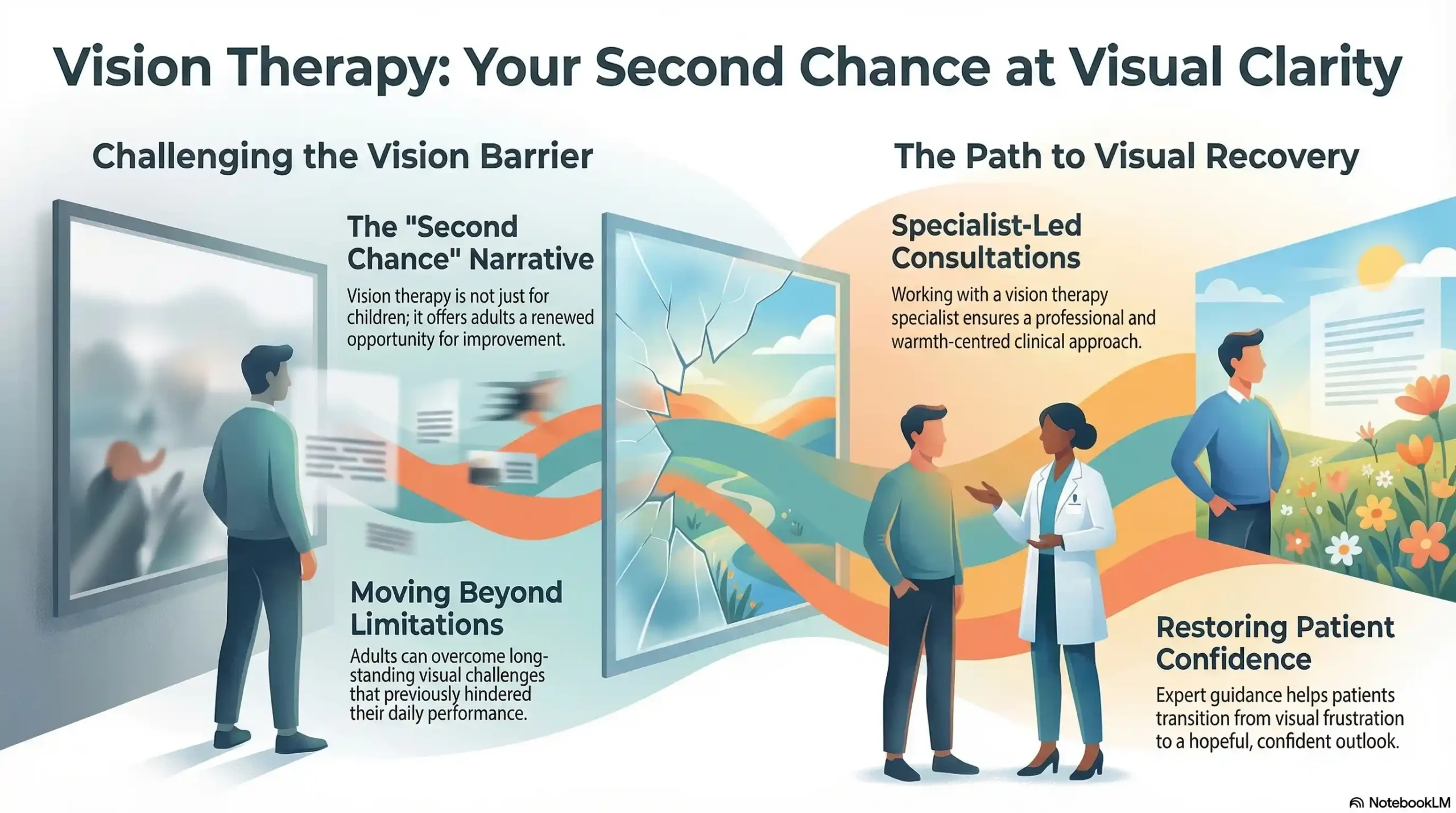
Why Patients Choose Cook Vision Therapy Center in Marietta, GA
When patients across Cobb County, Metro Atlanta, and the Southeast are seeking a trusted authority for strabismus care, they consistently arrive at one destination: Cook Vision Therapy Center, Inc.
The practice is led by Dr. David L. Cook, O.D., F.A.A.O., F.C.O.V.D. — an internationally recognized clinician, educator, and author with over forty years of experience in behavioral and developmental optometry. Dr. Cook holds the Fellowship of the College of Optometrists in Vision Development (FCOVD), one of the highest credentials available in the field of vision therapy, and is the author of VISUAL FITNESS and WHEN YOUR CHILD STRUGGLES — two authoritative resources that have guided patients and practitioners across the country.
The practice also benefits from the expertise of Dr. Ekta Patel, B.Optom, O.D., providing patients with a comprehensive, collaborative care team dedicated entirely to visual performance and rehabilitation.
What distinguishes Cook Vision Therapy Center is not only the depth of clinical expertise but the philosophy of care. Every patient receives a personalized, tailored therapy plan built around their specific visual challenges, goals, and lifestyle — not a generic program replicated across every case. For patients who cannot travel regularly to our Marietta, GA office, we offer Distance Vision Therapy Programs that extend our elite level of care to patients across the nation and beyond.
📅 Schedule Your Vision Therapy Evaluation
Ready to explore your options with a world-class vision therapy team? Schedule a Vision Therapy Evaluation at our Marietta, GA office today.
📍 1395 South Marietta Pkwy SE, Bldg 400, Ste 107, Marietta, GA 30067 📞 (770) 419-0400 🌐 cookvisiontherapy.com
What to Expect: The Cook Vision Therapy Patient Journey
Beginning care at Cook Vision Therapy Center is designed to be straightforward, low-pressure, and deeply informative at every stage.
Step 1 — Free Phone Consultation: Your journey begins with a complimentary phone consultation, giving you the opportunity to describe your situation, ask questions, and determine whether a full evaluation is the right next step. There is no obligation and no pressure — only honest, expert guidance.
Step 2 — Comprehensive Vision Therapy Evaluation: This in-depth evaluation goes far beyond a standard eye exam. Our team assesses how your eyes work together, identifies the specific nature and degree of your strabismus, and determines the neurological factors contributing to your condition. This evaluation is the foundation of your personalized care plan.
Step 3 — Personalized Therapy Program: Based on your evaluation findings, we design a tailored therapy plan that combines structured in-office sessions with guided at-home activities. Your commitment to the at-home component is a vital part of achieving your goals — vision therapy is a true partnership between our clinical team and you.
Step 4 — Measurable Progress & Life-Changing Outcomes: As your program progresses, we monitor and measure your visual performance at every stage. Our goal is not simply to straighten your eyes — it is to restore the full, functional visual performance that allows you to read comfortably, drive confidently, engage socially, and live the productive life you deserve.
🏛️ LOCAL RESOURCES & CITATIONS
1. Georgia Composite Medical Board — georgiamedicalboard.org
The official state licensing authority for Georgia healthcare providers — patients can verify the credentials and license status of any treating physician or optometrist before beginning care.
2. Georgia Department of Public Health — dph.georgia.gov
Georgia’s official public health authority provides state-level health resources, vision screening program information, and guidance on accessing specialized healthcare services across Cobb County and Metro Atlanta.
3. National Eye Institute (NEI) — nei.nih.gov
A division of the U.S. National Institutes of Health (.gov) offering peer-reviewed, federally backed clinical information on strabismus, amblyopia, and binocular vision conditions — the gold standard reference for patient education on eye health.
4. Cobb County School District — cobbk12.org
The official school district serving Marietta and surrounding communities — a relevant resource for parents, as the district’s vision screening protocols can be the first point of referral that flags a child’s undiagnosed strabismus or visual processing issue requiring specialized evaluation.
Take the First Step Toward Clearer, Straighter Vision in Marietta, GA
You deserve more than a rushed referral and a surgical consent form. You deserve a full picture of your options, a clinician who will take the time to understand exactly how strabismus is affecting your life, and a personalized plan designed to achieve lasting, functional results.
At Cook Vision Therapy Center, that is precisely what we offer — for patients in Marietta, across Metro Atlanta, throughout Cobb County, and for those traveling from across the Southeast and beyond.
🌟 Begin Your Journey to Restored Visual Performance Today
Cook Vision Therapy Center, Inc. 📍 1395 South Marietta Pkwy SE, Bldg 400, Ste 107, Marietta, GA 30067 📞 (770) 419-0400 🌐 cookvisiontherapy.com
Call us today to schedule your Free Phone Consultation or Vision Therapy Evaluation. Life-changing results begin with a single conversation.
Frequently Asked Questions
-
-
Surgery: Physically alters eye muscles for immediate cosmetic alignment.
-
Vision Therapy: Neurologically trains the brain and eyes to work together, improving depth perception and coordination over time
-
Disclaimer:
This article is provided for educational purposes only and should not be considered medical advice. Strabismus and binocular vision conditions vary widely between individuals, and treatment decisions should always be made in consultation with a qualified eye care professional. If you are experiencing symptoms of eye misalignment, double vision, or visual discomfort, schedule a comprehensive evaluation with a licensed optometrist or ophthalmologist. Cook Vision Therapy Center provides individualized assessments to determine the most appropriate treatment options for each patient.