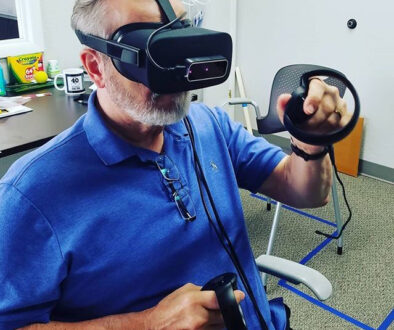
Eye Exercise Games for Adults: What Really Works?
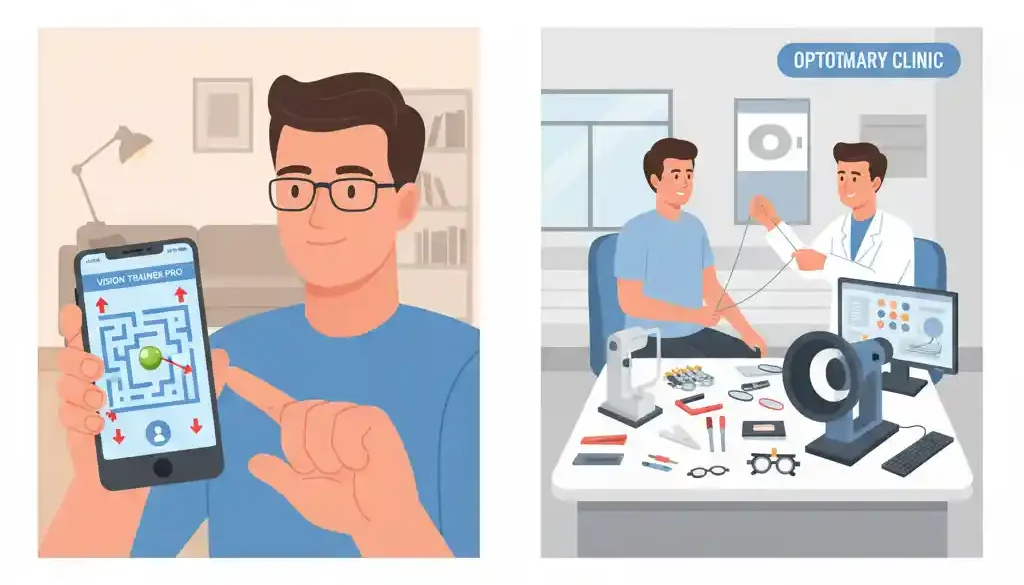
Eye exercise games and apps can provide mild benefits for general visual comfort, but they are not clinically proven to treat diagnosed vision conditions in adults. Conditions such as convergence insufficiency, strabismus, amblyopia, and post-concussion vision dysfunction require a personalized, medically supervised vision therapy program — not a consumer app. Adults in Marietta, GA seeking real, lasting results are encouraged to consult a certified vision therapy specialist for a comprehensive evaluation.
1. What Are Eye Exercise Games — And Why Are Adults Turning to Them?
In an era defined by screens, remote work, and relentless digital demands, a growing number of adults are quietly struggling with their vision — and quietly searching for solutions. Persistent headaches after long workdays, blurred text that seems to swim on the page, and the uncomfortable sensation of eyes that simply refuse to work together are no longer rare complaints. They are daily realities for millions of adults across Metro Atlanta and beyond.
It is no surprise, then, that eye exercise games and vision training apps have surged in popularity. Promising to strengthen eye muscles, improve focus, and reduce strain from the comfort of a smartphone, these tools have attracted a wide and hopeful audience. But do they actually deliver — especially for adults dealing with real, diagnosed vision conditions?
1.1 The Rise of Digital Vision Training Apps
Consumer vision training apps typically offer a range of activities: focus-shifting drills, peripheral awareness exercises, tracking challenges, and contrast sensitivity tasks. Marketed as convenient, low-cost alternatives to clinical care, they appeal to adults who are frustrated, time-pressed, or simply unaware that a higher level of specialized care exists.
The appeal is understandable. For someone experiencing daily eye fatigue or difficulty concentrating during long reading sessions, the idea of a 10-minute daily app routine feels accessible and empowering. The reality, however, is considerably more nuanced — particularly when the root cause is a clinical condition that an app was never designed to address.
1.2 Common Conditions That Drive Adults to Seek Eye Exercises
Adults who find themselves drawn to eye exercise games are often unknowingly experiencing symptoms of diagnosable, treatable vision conditions, including:
- Convergence Insufficiency: Difficulty coordinating both eyes when focusing on near tasks, causing headaches, double vision, and loss of concentration during reading or computer work.
- Digital Eye Strain / Binocular Vision Dysfunction: Chronic discomfort, blurred vision, and fatigue triggered by prolonged screen exposure.
- Double Vision (Diplopia): A symptom that can indicate a misalignment between the two eyes requiring professional assessment.
- Post-Concussion Visual Symptoms: Persistent visual disturbances following a traumatic brain injury or concussion, including light sensitivity, tracking difficulties, and spatial disorientation.
Each of these conditions has a distinct clinical profile — and each requires a distinctly different treatment approach than any consumer app can provide.
📞 Not sure if what you’re experiencing is a treatable vision condition? Call Cook Vision Therapy Center at (770) 419-0400 for a Free Phone Consultation and get answers from an internationally recognized vision therapy specialist. There is no pressure — just expert guidance.
2. What Does the Evidence Say? The Science Behind Eye Exercise Games
When evaluating whether eye exercise games are effective for adults, it is important to separate two distinct questions: Can exercises influence visual function? Can consumer apps deliver clinically meaningful results for diagnosed conditions?
The answer to the first question is yes — with important qualifications. The visual system is neurologically plastic, meaning that targeted, structured training can produce measurable changes in how the brain and eyes work together. This is the scientific foundation upon which clinical vision therapy is built.
The answer to the second question, however, is far more limited.
2.1 What Eye Exercise Apps Can — and Cannot — Do
Consumer eye exercise apps may offer modest benefits in specific, narrow contexts. Some research suggests that certain tracking and contrast sensitivity tasks can provide mild improvements in healthy individuals seeking general visual wellness. For athletes looking to sharpen reaction time or for individuals wanting to reduce mild screen fatigue, structured exercise routines can play a supportive role.
However, the research is consistent on one critical point: app-based eye exercises have not been demonstrated to effectively treat diagnosed binocular vision disorders in adults. Conditions such as convergence insufficiency, strabismus, and amblyopia involve complex neurological and muscular dysfunctions that require precise, individualized therapeutic intervention — not a one-size-fits-all digital routine.
2.2 Why Generic Exercises Fall Short for Clinical Conditions
The fundamental limitation of eye exercise games is their inability to assess, adapt, and respond to an individual patient’s unique visual profile. Clinical vision therapy is built on a continuous feedback loop: a trained specialist evaluates how the patient’s visual system responds to each exercise and adjusts the program accordingly in real time. Consumer apps lack this critical capability entirely.
Additionally, many of the most effective vision therapy techniques require specialized clinical equipment — prisms, lenses, stereoscopic instruments, and computerized systems — that cannot be replicated on a standard smartphone screen. The therapeutic environment itself is a core component of the treatment, not merely its delivery platform.
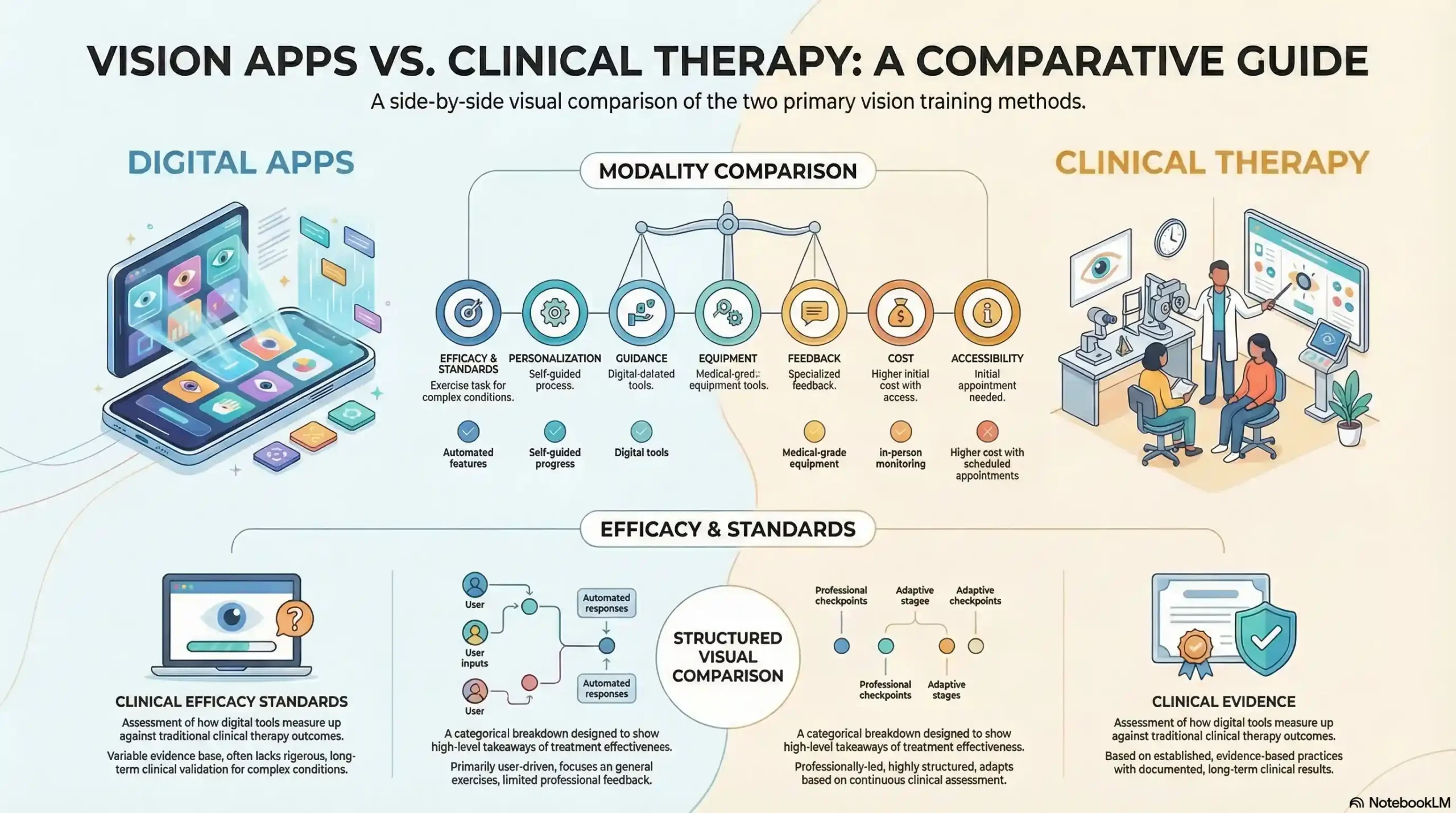
| Feature | Eye Exercise Apps | Clinical Vision Therapy |
|---|---|---|
| Personalization | Generic routines for all users | Individualized program based on a comprehensive evaluation |
| Medical Supervision | None | Supervised by a COVD-certified specialist |
| Conditions Treated | General wellness only | Convergence Insufficiency, Strabismus, Amblyopia, TBI, and more |
| Equipment Used | Smartphone screen | Specialized clinical instruments, prisms, lenses |
| Measurable Outcomes | Self-reported comfort improvement | Clinically documented functional improvements |
| Duration | Indefinite, self-directed | Structured program (months to one year) |
| Insurance Eligibility | Not applicable | May be covered under medical or vision insurance |
3. The Difference Between Eye Exercise Games and Clinical Vision Therapy
Understanding this distinction is perhaps the single most important step an adult with vision difficulties can take. Vision therapy is not a collection of eye exercises. It is a structured, evidence-based medical program — as different from an eye exercise app as physical therapy is from a YouTube workout video.
3.1 How Clinical Vision Therapy Actually Works
Clinical vision therapy is a customized program of activities and exercises designed to correct specific visual dysfunctions — not simply to strengthen eye muscles, but to retrain the neurological pathways that govern how the eyes and brain process visual information together.
Sessions are conducted in a clinical environment by a trained vision therapist under the direct supervision of an optometrist. Each session builds progressively on the last, introducing new challenges as the patient’s visual system develops greater efficiency and stamina. Critically, patients also complete carefully prescribed home exercises between sessions — reinforcing in-office gains and accelerating progress.
The result is not a temporary reduction in symptoms. The goal, as practiced at Cook Vision Therapy Center, is to produce changes that are lasting and life-altering — transforming how a patient sees, learns, works, and experiences the world.
3.2 The Role of a COVD-Certified Specialist
Not all eye care providers offer vision therapy, and not all vision therapy is created equal. The gold standard of care is a practitioner who holds Fellowship status with the College of Optometrists in Vision Development (COVD) — a credential that signifies advanced training, rigorous examination, and demonstrated clinical competence in behavioral and developmental optometry.
Dr. David L. Cook, O.D., F.A.A.O., F.C.O.V.D., founder of Cook Vision Therapy Center, holds this distinction — alongside more than forty years of clinical experience, international recognition as an educator and clinician, and authorship of foundational texts including VISUAL FITNESS and WHEN YOUR CHILD STRUGGLES. For adults who have been failed by generic solutions, Dr. Cook represents the definitive authority and a clear path forward.
4. Adult Conditions That Respond Best to Clinical Vision Therapy
One of the most persistent misconceptions about vision therapy is that it is exclusively for children. In reality, adults can achieve remarkable, clinically documented improvements across a wide range of conditions. The neurological plasticity that makes vision therapy effective in children does not simply switch off at adulthood — it simply requires a more precisely targeted therapeutic approach.
Convergence Insufficiency is among the most common and most successfully treated conditions in adult vision therapy patients. Adults experiencing headaches, eyestrain, and difficulty sustaining focus during reading or screen work — symptoms frequently dismissed as stress or the need for new glasses — often find that targeted binocular vision therapy resolves what years of corrective lenses never could.
Strabismus (Crossed Eyes) in Adults is a condition that many patients are told can only be addressed through surgery. Cook Vision Therapy Center has a long and successful history of treating adult strabismus through non-surgical vision therapy programs, achieving straight eyes, improved 3D vision, and restored eye-body coordination — outcomes that have eliminated the need for invasive procedures in patient after patient.
Amblyopia (Lazy Eye) in Adults was once considered untreatable beyond childhood. Current clinical evidence and extensive practice experience tell a different story. Patching-free treatment programs at Cook Vision Therapy Center have helped adult patients improve visual acuity in the amblyopic eye and restore functional binocular vision — outcomes that directly improve daily life, from reading to driving.
Post-TBI and Concussion Vision Rehabilitation represents one of the most critical and life-restoring applications of adult vision therapy. Persistent double vision, tracking difficulties, light sensitivity, and spatial disorientation following a traumatic brain injury or concussion are not simply symptoms to manage — they are dysfunctions that neuro-optometric rehabilitation can meaningfully address. Patients at Cook Vision Therapy Center have regained the ability to drive, return to work, and rebuild productive lives through this specialized care.
Digital Eye Strain and Binocular Vision Dysfunction affect an enormous and growing population of working adults whose professional lives are inseparable from screens. Where generic eye exercises offer only temporary relief, a clinical evaluation can identify the precise binocular dysfunction driving chronic discomfort — and a personalized therapy program can resolve it.
5. Why Adults in Metro Atlanta Choose Cook Vision Therapy Center
For adults across Marietta, Kennesaw, Roswell, Duluth, and the broader Metro Atlanta region — and for patients traveling from Chattanooga, Birmingham, Charleston, and across the nation — Cook Vision Therapy Center represents a singular standard of specialized care.
Dr. David L. Cook, O.D., F.A.A.O., F.C.O.V.D. brings more than four decades of clinical experience, international recognition, and a deeply personal commitment to transforming patient lives. His approach is built on a foundational belief: that every patient deserves a thorough, individualized evaluation and a care plan tailored precisely to their unique visual challenges — not a generic protocol designed for the average case.
The center’s treatment philosophy reflects a clear preference for non-surgical, personalized approaches that address the root cause of visual dysfunction rather than masking its symptoms. For patients who have been told that surgery is their only option, this philosophy represents not just an alternative — but a profound sense of relief and renewed hope.
Recognizing that exceptional care should not be limited by geography, Cook Vision Therapy Center offers personalized Distance Vision Therapy Programs for patients who are unable to attend regular in-person sessions. Following a comprehensive initial evaluation, these programs extend the clinic’s elite care to patients across the Southeast and beyond — making world-class vision therapy accessible regardless of location.
The results speak in the voices of patients themselves: a parent whose child’s life was changed, an adult who avoided surgery, a rehabilitation patient who regained the ability to drive. These are not marketing claims. They are the documented outcomes of a practice built on expertise, compassion, and four decades of commitment to restoring visual performance.
🗓️ Ready to find out if clinical vision therapy is right for you? Schedule your comprehensive Vision Therapy Evaluation at Cook Vision Therapy Center — Metro Atlanta’s leading vision therapy practice. 📍 1395 South Marietta Pkwy SE, Bldg 400, Ste 107, Marietta, GA 30067 📞 (770) 419-0400 | 🌐 cookvisiontherapy.com
6. What to Expect: The Cook Vision Therapy Patient Journey
For adults who have spent years managing symptoms — or who have only recently discovered that a clinical solution exists — knowing what to expect from the process is an important step toward taking action. The journey at Cook Vision Therapy Center is designed to be clear, collaborative, and centered entirely on the patient’s goals and quality of life.
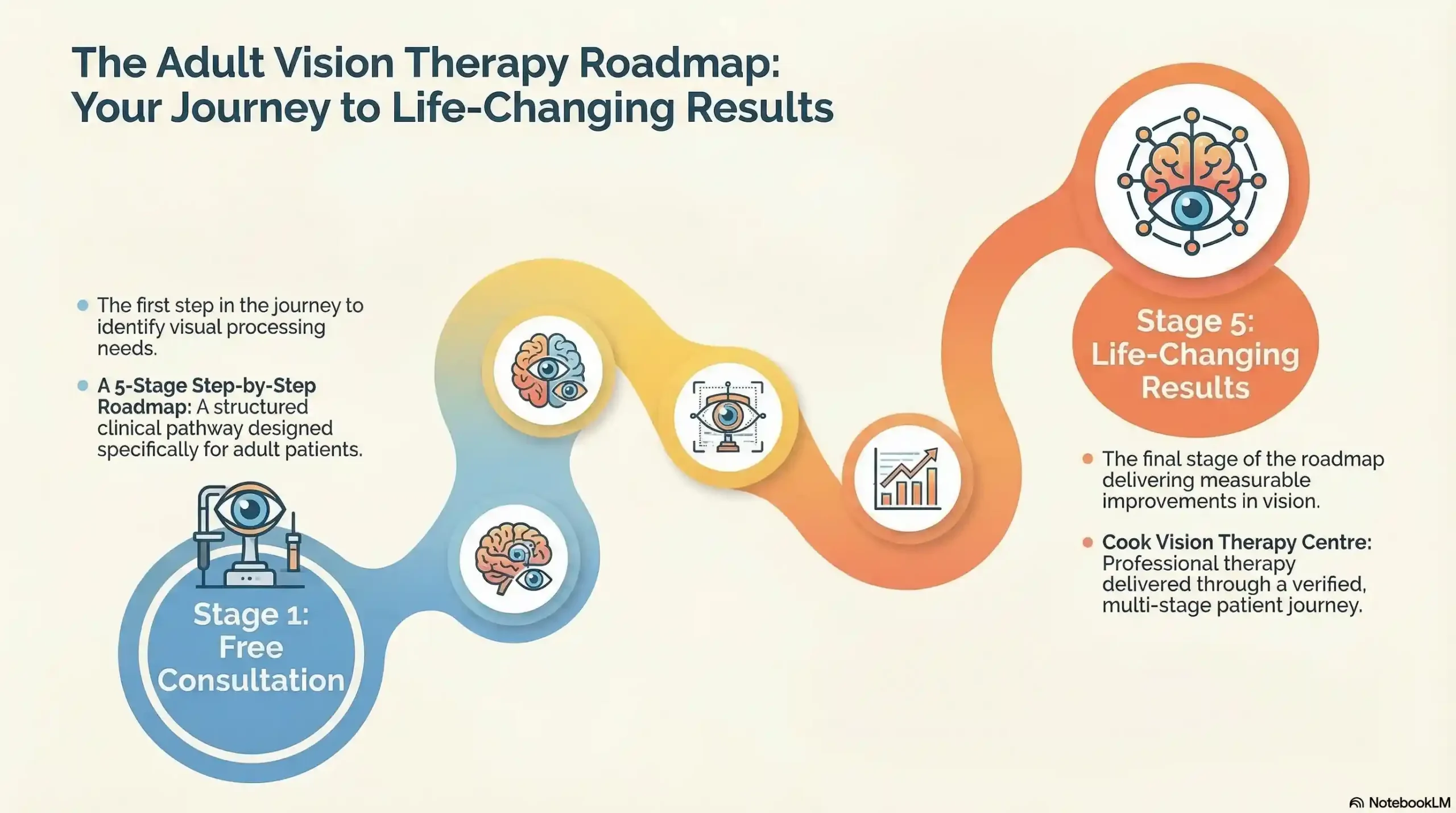
| Stage | What Happens | Patient Outcome |
|---|---|---|
| Free Phone Consultation | Speak directly with the practice to describe symptoms and ask questions | Clarity on whether a formal evaluation is the right next step |
| Vision Therapy Evaluation | Comprehensive assessment of binocular vision, tracking, focusing, and visual processing | A definitive diagnosis and a clear, personalized path forward |
| Personalized Treatment Plan | Dr. Cook designs a program tailored to your specific conditions and goals | Confidence that your care is built for you — not a generic protocol |
| In-Office Sessions + Home Exercises | Structured weekly sessions with a trained therapist, supported by prescribed home activities | Progressive improvement in visual function, comfort, and performance |
| Program Completion | Final evaluation confirms measurable gains; distance programs available for ongoing support | Life-changing results — and the foundation to become a vocal advocate for others |
6.1 Starting With a Free Phone Consultation
The first step requires nothing more than a phone call. Cook Vision Therapy Center offers a free phone consultation specifically designed to eliminate the hesitation that prevents many adults from seeking the care they need. This is an opportunity to describe your symptoms, ask questions, and receive honest, expert guidance — with no pressure and no obligation.
6.2 The Comprehensive Vision Therapy Evaluation
The evaluation is the cornerstone of the Cook Vision Therapy experience. Unlike a routine eye exam, which primarily measures visual acuity, the Vision Therapy Evaluation assesses the full spectrum of binocular visual function: how the eyes work together, how they track, how they focus, and how the brain processes the information they deliver. This thorough assessment provides the definitive diagnosis that makes a truly personalized treatment plan possible.
6.3 Your Personalized Treatment Program
No two patients receive the same program at Cook Vision Therapy Center. Your treatment plan is built from the ground up around your specific diagnosis, your daily demands, your goals, and your timeline. In-office sessions are conducted by trained vision therapy staff under Dr. Cook’s direct supervision, with carefully designed home exercises that reinforce each week’s clinical progress. The result is a collaborative partnership — one in which your active engagement is as essential to success as the expertise guiding your care.
👁️ Don’t let vision problems hold you back any longer. Contact Cook Vision Therapy Center, Inc. today and take the first step toward restored visual performance. 📞 (770) 419-0400 📍 1395 South Marietta Pkwy SE, Bldg 400, Ste 107, Marietta, GA 30067 🌐 cookvisiontherapy.com Proudly serving Marietta, Kennesaw, Roswell, Duluth, and patients across Metro Atlanta, the Southeast, and the nation.
Frequently Asked Questions
-
Yes. They are highly effective for adults treating binocular vision issues like convergence insufficiency, double vision, or lazy eye, provided you commit to consistent daily practice
Disclaimer:
This article is for informational and educational purposes only and does not constitute medical advice. Vision symptoms such as headaches, double vision, eye strain, or reading difficulties should be evaluated by a qualified eye care professional. Individual diagnosis and treatment recommendations can only be made following a comprehensive eye and vision assessment by a licensed optometrist or vision therapy specialist