The VTS-4 HoloLens and Personalized Vision Therapy
The VTS-4 HoloLens and Personalized Vision Therapy


The VTS-4 HoloLens and Personalized Vision Therapy
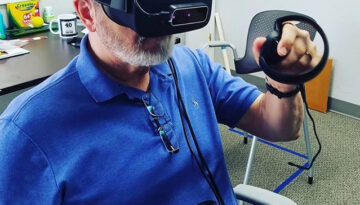
Cook Vision Therapy Center Celebrates National Milestone in Augmented Reality Care While many advanced vision therapy clinics utilize standard computer orthoptics platforms, Cook Vision Therapy Center has long held a premier position in cutting-edge care. In 2022, Cook Vision Therapy Center was one of the very first practices in the […]

Pseudostrabismus often resolves on its own as a child’s facial features naturally mature — typically between ages one and five — because the condition is caused by physical characteristics like a wide nasal bridge or epicanthal folds, not by actual eye misalignment. However, it only resolves if the diagnosis is […]

Pseudostrabismus is a harmless optical illusion in which a baby’s eyes appear crossed or misaligned, even though they are perfectly straight. It is caused by normal infant facial features — most commonly wide nasal bridges and epicanthal folds — and typically resolves on its own by 18 months as the […]

How long does it take to fix a lazy eye? For children, lazy eye (amblyopia) treatment typically takes between 3 and 12 months, depending on age, severity, and the treatment approach used. Adults can also achieve meaningful improvement, though timelines are generally longer. At Cook Vision Therapy Center in Marietta, […]

Strabismus surgery physically repositions the eye muscles to improve cosmetic alignment but does not retrain the brain-eye connection, which means misalignment can recur. Vision therapy, by contrast, is a non-surgical, clinician-supervised program that retrains the neurological systems controlling how the eyes work together — addressing the root cause of strabismus […]

Eye exercise games and apps can provide mild benefits for general visual comfort, but they are not clinically proven to treat diagnosed vision conditions in adults. Conditions such as convergence insufficiency, strabismus, amblyopia, and post-concussion vision dysfunction require a personalized, medically supervised vision therapy program — not a consumer app. […]
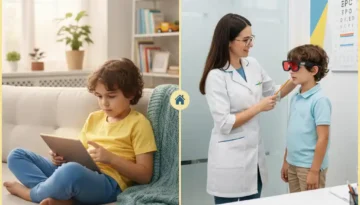
Vision therapy games and apps may offer limited benefits for mild visual tasks, but they cannot replicate the neurologically targeted, medically supervised results of in-office vision therapy. For conditions like convergence insufficiency, strabismus, amblyopia, or post-TBI rehabilitation, a personalized clinical program delivered by a certified specialist produces measurably superior, lasting […]

Lazy eye games and apps can provide mild visual stimulation, but they are not a substitute for supervised vision therapy. Clinical research shows that structured, personalized vision therapy — which trains both eyes to work together — produces measurably superior, lasting results for amblyopia in both children and adults compared […]

Many children diagnosed with ADHD or attention disorders may actually have an undetected functional vision problem — such as convergence insufficiency or a visual processing disorder — that makes sustained reading and focus physically uncomfortable. Unlike standard eye exams, which only test visual acuity (sharpness), a comprehensive vision therapy evaluation […]